What Do The Evangelion Rebuilds Do Better?

When you take an established property with a certain level of fame in the cultural gestalt and try to do it again, you are asking for criticism. Remakes have these nasty labels attached to them because in principal a worthwhile piece of art should be able to stand on its own. Why remake something when the old work still exists?

Apart from being a cash-grab, maybe to update art that is arguably out of date and hasn’t aged well. Better yet, perhaps the remake signifies an intention to take a work in another direction to use the original’s framing device in a new innovative way. Either way, it’s easy to divide people over a new vision. Too close to the original and it seems pointless, but too different and it could be seen as a betrayal.

But what happens when the same mind behind the original comes back to remake his work, albeit with new help? Hideaki Anno’s classic Neon Genesis Evangelion certainly gained fame over the years despite how infamous it was at the time. The psychological drama fueled by Anno’s anguish made it legendary and yet Anno felt there was more to be done.

Anno split off from Gainax and together with his underling, Kazuya Tsurumaki, he decided to “rebuild” Evangelion. These films have been praised and lambasted in equal measure over the years. Most often people find an issue with the lack of thoughtful psychological pathos that made NGE‘s characters so real despite the premise. You can find plenty who will praise the visuals of the rebuilds, but many who will argue it doesn’t make up for what is lost.

But is there nothing here of value? Are these films not without some quality that is superior to the originals? I like to think that isn’t the case and after finally watching them recently, I think there are plenty of reasons to fall in love with these films. With the fourth and presumably final film coming in 2020, now is the perfect time to ask, what did the rebuilds get right?

Continue reading
“To The Stray Dogs” – A Bungo Stray Dogs Retrospective

[2025 Update: This has consistently been one of the most-read blog posts on this site. So I decided to take a trip back in time, do a little grammar check, update the formatting slightly, but for the most part, leave my past opinions as is. However, if you’d like to check out my more current opinions on this wonderful series, check out my Season 4 and Season 5 reviews over on GameRant. Plus, like 90% of the Bungo Stray Dogs coverage on that site was probably written by me, so just search Bungo and go nuts.]

Recently, I enthusiastically wrote about Bungo Stray Dogs as it was in the middle of its third season. In the middle of writing it, I remembered that somehow I had avoided reviewing any of the series prior. In that same post, I also realized I have a lot of positive things to say, as it turns out. Three seasons and a movie may seem like a tall order for one review, but I’m nothing if not a man of (too) many words.

For a series that I wouldn’t hesitate to recommend to my friends, the first season of Bungo has a few more problems upon second glance. This happens a lot with good shows, I feel. There is a first season that catches your attention with some elusive quality you can’t quite put your finger on. Next up, the sequels build on the formula, turning the show into something even grander than you first envisioned.

The real tricky part is getting people into it without over-hyping it purely on the grounds of how good it gets later on. Like, I’m sure if I kept watching Breaking Bad season four, I would love it, but I didn’t wanna watch Skylar try to buy a god damn car wash for half a season. Where was I? Oh yeah, allow me to start by giving you an honest look at this show’s humble beginnings.

Continue reading

A Review of Attack on Titan, Season Three

How in the hell did Attack on Titan Season Three, Part 2 become #2 on MyAnimeList’s all-time top anime list? I was already a little surprised when Your Name dropped to #6 after Hunter x Hunter 2011 (makes sense), another iteration of Gintama (meh), and Steins;Gate (how have I not watched this yet?). However, for Attack on Titan to take #2, particularly in its third season? Now that threw me for a loop.

Granted, I’m not pretending this list is the be all end all, as it is merely determining the best based on the average score given by the users who have rated it on their lists. None of these shows are perfect. Both Fullmetal Alchemist Brotherhood and Your Name are arguably overrated and flawed, even if I think they are great. However, this list does give a sense of the nature of certain show’s fanbase and the cultural discussion surrounding a work.

I’ve never seen Gintama, nor does it look that interesting, but for this show to consistently score this highly tells me that the fanbase must be one of the most committed ever. Likewise, Hunter x Hunter 2011 is one of the most highly scored Shonen’s out there. Steins;Gate to me is the equivalent of that popular Emmy nominated show everyone says to watch but that I’ll take years to sit down and enjoy. The list says a lot more than just which anime is the best.

As such, my goal today is not to argue whether or not Attack on Titan is deserving of this status, but to understand why the fanbase is reacting so strongly and now of all times. Especially because, to me, season three is the weakest of three admittedly solid seasons.

Continue reading

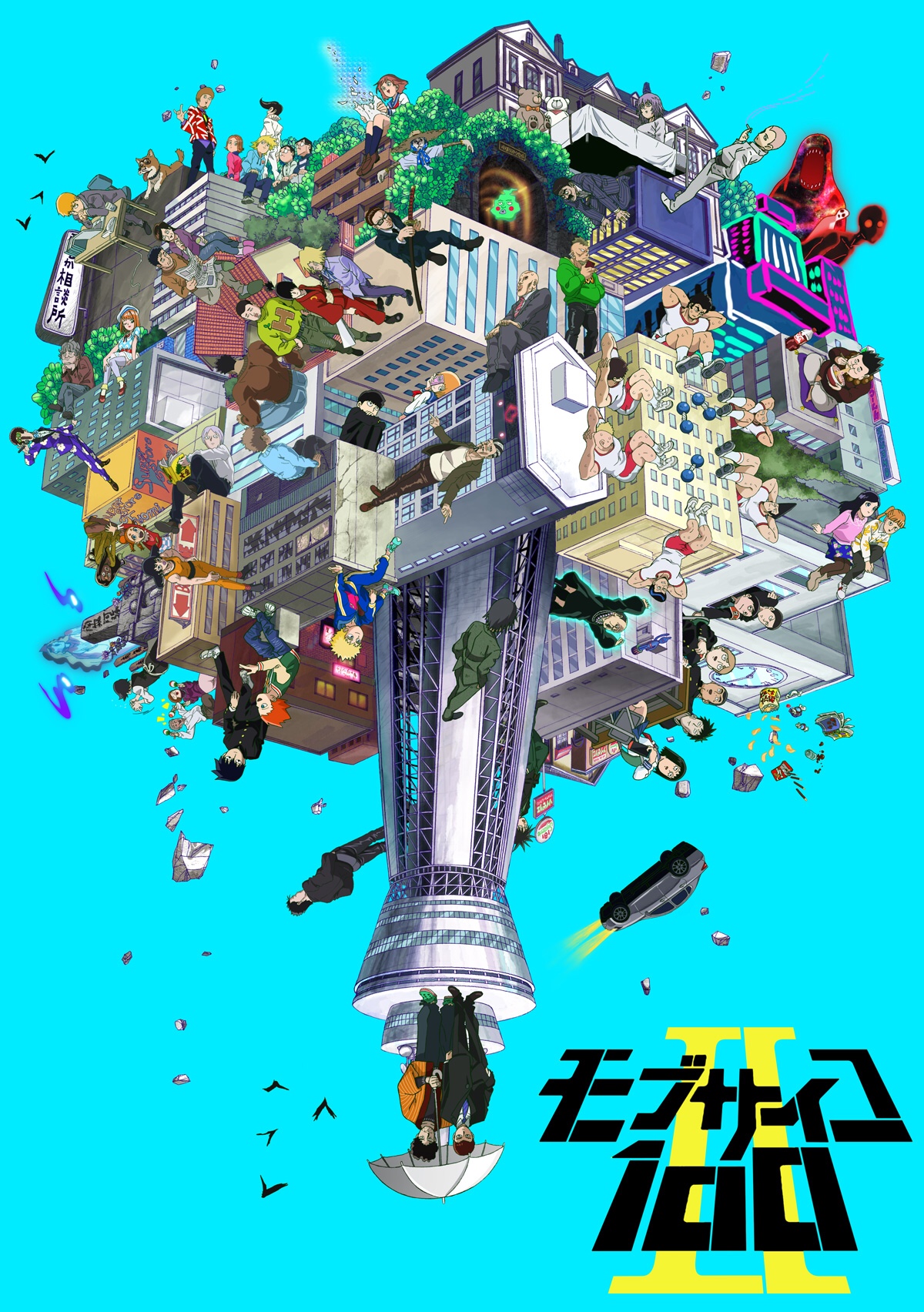
A Review of Mob Psycho 100 II

In my review of season one, I praised how ONE manages to make overpowered characters likable and their stories tense through sheer emotion. This story about self-betterment and the discussion permeating the spectacle made battles ones of ideology in addition to super-powered flair. With a sequel, how does one continue this discussion without becoming repetitive?

Sequels can often succumb to a temptation to be like their predecessors, but bigger and better. Doing something different, even radically so, can be remembered better, but it is far more risky. That being said, you don’t have to be radical in order to make the sequel interesting in new ways. Sometimes it simply requires a change in focus.

Mob Psycho 100 II does exactly that.

Continue reading

A Review of Neon Genesis Evangelion

A harsh reality that became apparent deeper into my anime fandom was realizing that some shows become weirdly inaccessible through legal means. Obviously, piracy is a handy option when publishers don’t make them available, but I enjoy owning physical copies of shows I’m particularly fond of. Secondly, I find it strange when certain shows aren’t available available to purchase or stream at all, even when they are famous.

I get it when the niche shows I like go out of print, but universally loved classics being slept on is something else. After being out of print for years, the most recent being a pricey Blu-ray collection, Evangelion has made its streaming debut on Netflix. Since I’ve never actually finished the series, this release was the perfect time to finish what I started. But more importantly, it is a chance to ask what this series still offers viewers today and how it holds up.

Tumbling down, Tumbling down…

A Review of Mob Psycho 100

In American superhero culture there is an often annoying discussion about power-level in regards to fictional characters. The logic of any shonen action series or superhero story steeped in thematic morals is that the hero with the strongest will and heart wins specifically because of those components.

Yet still people will get all up in arms, partly because suspension of disbelief is often integral to the balance needed to keep audiences entertained. The other reason is that characters who are overpowered are often criticised because their power seems unearned, their victories seem illogical, or that there is no tension. It is the same reason why Superman is such a divisive character.

Funnily enough, the works of manga artist ONE seem to avoid these issues in discussion surrounding the works. It could be because the very nature of characters being overpowered are the point of the story like in One Punch Man, but there is more to it than that. After finally watching Mob Psycho 100, it is apparent that ONE’s talent comes from his ability to tackle complex themes and to produce tension and stakes through character drama rather than simply through the power levels of the characters.

Now that I have finally watched it, One thing is for sure, and it is that I am even more angry that Mob Psycho 100 did not win best animation back in 2016.

Continue reading

A Review of The Promised Neverland

There are some shows that I immerse myself in and binge within 24 hours, totally content and happy, only to find myself going blank when I attempt to assess the show’s quality. Certain genres are hard to critique because the magic that makes them click for audiences are more difficult to put into words. The Promised Neverland is one of those shows.

Specifically, this is a show depicting a mental tug of war between two sides trapped together. The tide is constantly shifting in one side’s favor and it all builds to an elaborately constructed conclusion, the complexity of which I- an aspiring writer- could only dream of creating. It’s… a lot to unpack, but the short version is: It’s really good.

Continue reading

A Review of Netflix’s Ultraman

Look at any of Japan’s most prominent genres and you might notice how self-referential the country’s media is. The tropes and visual iconography seen in classic Mecha like 1988’s Gun Buster can be seen mimicked in everything from Gundam to other classics like Gurren Lagann. I think of this as a cultural signature of Japan that they love to pay homage to the art that inspires new works. It’s about embracing new while not forgetting the old.

This past fall, SSSS Gridman hit the scene, especially committed to capturing the magic of classic Tokusatsu beyond visual cues. In the same vein, a new series on Netflix appears to have the same intentions, though arguably more accessible than Gridman. With sci-fi directors Kenji Kamiyama (Stand Alone Complex) and Shinji Aramaki (Appleseed) helming the series, I was dead set from the first trailer. Here is my review of the Netflix Original Series, Ultraman.

Continue reading

The Best Ghost in the Shell Film (Isn’t the One You Think)

It’s one thing to review anime that no one talks about, and that’s pretty fun. Chances are if I’m struggling to find content discussing an obscure show that looks cool, there are others just as aggrevated. I feel obligated to give these shows some publicity, whether it be good or bad. What’s more interesting are the times when the anime I’m reviewing is a more obscure part of a well-known series.

Recently I had the opportunity to analyze a film for my course on media criticism and decided to write about Ghost in the Shell: Innocence, the sequel to the very influential Ghost in the Shell from 1995. Despite having the same director and an impressive visual onslaught, the film has never gotten the same acclaim. after all these years. This surprises me, because given the choice between which I like better… I might enjoy Innocence more.

This is a reworked, SPOILER-FREE version of an essay I am wrote for my class on media criticism, so treat this like a review of the film. For the UNEDITED ESSAY, click here.

Continue reading