A Review of Burn the Witch

Bleach, despite the myriad criticisms I’ve heard leveled at it, has maintained a reputation akin to anime royalty. Even from the outside, it isn’t unfathomable as to why. The art direction and style is striking enough that I can’t say I’ve seen many shows that have mirrored the look of its characters. Additionally, the show’s lifespan on cartoon blocks like Toonami guaranteed it a legacy in the minds of a generation that stayed up way too late on a Saturday night to see the newest episodes.

2020 marks the 20th anniversary of the franchise and in celebration of that, the series seems to be getting a resurgence in more ways than one. Firstly, it was announced that the manga’s final arc would be adapted in a new anime project. Secondly, a new manga spinoff of Bleach would begin in the summer of this year. The spinoff had previously started as a one-shot back in 2018 but would now turn into a full series, with a short film meant to generate hype and interest. The series in question: Burn The Witch.

Continue reading

The Anthology From the Man Who Brought You Akira

No convention has been a greater boon to animation as a whole than the anthology. Granted, I love anthologies in most mediums. A collection of short stories from a slew of diverse, creative minds can expose audiences to all kinds of stories and genres they wouldn’t normally see or seek out themselves.

In terms of animated anthologies, works like Batman: Gotham Knight, The Animatrix or recent experiments like Love, Death, & Robots are perfect examples. They expand upon established works and introduce their own lore spanning myriad genres and subject matter, all while experimenting with myriad art styles.

The best part is that you can hook the audience with at least one story and they’ll surely be curious enough to see how the others fare. Maybe they don’t love all of them, but even one or two great stories can make the entire collection worth it, especially if the whole package is an hour and forty-five-minute film with three stories.

In 1995, Madhouse and Studio 4°C collaborated to create Memories, a collection of three short films based on short manga stories written by Katsuhiro Otomo, the man who created Akira. Since Otomo seems to always be involved in the animated adaptations of his work, he was the executive producer for Memories and even directed the third and final short himself.

Together with Darker Than Black director Tensai Okamura, Studio 4°C co-founder Koji Morimoto, and legendary director/writer Satoshi Kon, Memories was an ambitious fusion of three very different kinds of stories. If the objective was to make something that would stick in your mind, then they certainly picked a fitting title.

Continue reading

Masahiro Ando’s Shakespearean Epic; A Review of Blast of Tempest

Here comes Matthew again, leaping to review another anime by Bones. I suppose that’s all I’m good for, isn’t it? And it’s directed by Masahiro Ando, no less…

Is Masahiro Ando my favorite anime director? He’s certainly up there with blokes like Takuya Igarashi. After all, Ando directed Snow White with the Red Hair, a show that I consider to be an empowering masterpiece of feel-good fantasy romance. Be it a drama or an action show, he is a talented director… though not without some missteps.

What I watched of Canaan never gripped me and reeked of a show whose potential was hurt by low-denominator tropes and poor writing. Under the Dog was an average pilot to a series that will never come out. And Sirius the Jaeger? More like Serious Disappointment (don’t hit me).

I would call Masahiro Ando the Brad Bird of anime. He makes some legendary stuff that will stick with you for ages, but he also tends to bat 50/50. It’s hard to tell why. Maybe it’s the source material on certain shows, maybe it’s other staff members, or maybe Ando is just inconsistent depending on the project.

I’ll cut through some of the snark and assure you of one thing, though. Blast of Tempest (or, Zetsuen no Tempest: The Civilization Blaster) is certainly on the good side of Ando’s batting average.

Continue reading

A Love Letter to Animation – A Review of Keep Your Hands off Eizouken!

In 2015, P.A. Works produced what would be remembered as one of the best shows of the year, Shirobako. The series was, funnily enough, an anime about making anime. It was praised for its depiction of the hardships of working in the industry as well as the optimism with which it approached its story of overcoming hardship.

There have been a few shows that have dealt with similar subjects, usually in a business-type setting. There was New Game, about game development, Girlish Number, a cynical comedy about the darker side of anime production, and all-in-all, plenty of shows about working women in creative fields.

However, no other show quite retained the same popularity and acclaim over time quite like Shirobako. That is, until now. After ONA’s like Devilman and films like Ride Your Wave and The Night is Short, Walk on Girl, Masaaki Yuasa returned to TV anime for something truly special.

Eizouken ni wa Te wo Dasu na, or Keep Your Hands Off Eizouken, might very well be one of the most uplifting, insightful, and inspiring shows I’ve seen in a very long time. It does for the industry much what Shirobako did, openly disclosing the ups and downs of the business, but in a way far more imaginative and stylistic than it’s predecessors.

Continue reading

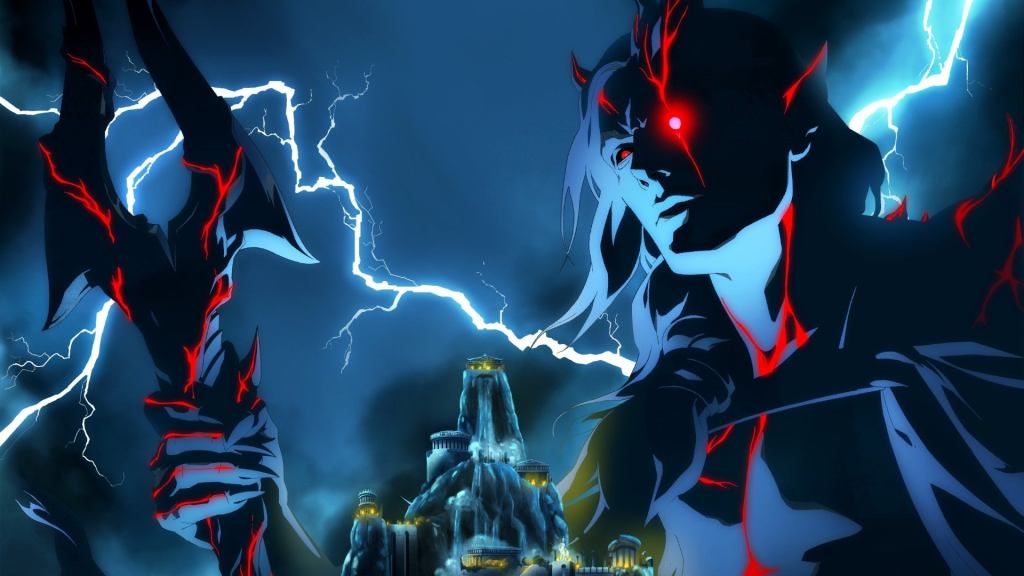
Castlevania Series Review

Video game adaptations are almost always bad. The best of them excel only on the condition that you overlook large caveats, be they performances, the script, or how faithful the project is to the original. Video games are hard to adapt. You’re either trying to appeal to fans and alienating movie-goers or vice-versa. Both can fail depending on what is being adapted and how.

In the mid-2000s’, Warren Ellis wanted to make a direct-to-video animated film based on Castlevania. While the script was approved by Konami, the work ended up stuck in production hell for years. Adi Shankar, a producer who went viral with his “Bootleg Universe” series of fan-films, eventually was approached about producing an animated series based on Ellis’ script. While he turned down the same idea for a live-action film, believing live-action wouldn’t fit, he was more than happy to work on this one.

Opening Title Rough Animation by Spencer Wan

So eventually, Netflix adapted Ellis’ script into an animated series produced by Powerhouse Animation, an American studio. The first season – all four episodes of it – came out in July of 2017 and took the internet by storm. Everyone, myself included, was instantly clamoring for more. With the release of the second season in the fall of 2018, the show revealed even more of its potential with a longer season, more character drama, and even better animation.

With the recently released and certainly shocking third season fresh in our minds, it might be good to look back on the series as a whole thus far. It’s certainly the best video game adaptation, but is that saying a whole lot? Is Castlevania more than just the sum of its gorgeous animation?

Continue reading

An Obligatory, Arbitrary List of Anime Fight Scenes

While not necessarily in vogue among anime critics lately, it isn’t hard to find rankings of very specific subjects within the community. “Top 10 Strongest Anime Characters”, “Top Ten Anime Villains”, “Top Ten Anime Couples”, etc. And of course, who could forget the perpetually memed “Top Ten Anime Betrayals,” which I don’t think I’ve ever seen created unironically.

However, while overdone, it has never felt like the kind of thing that anime critics do begrudgingly out of some unspoken tax as per the job. After all, anime has a lot of cool shit and fights are no exception. It’s only obligatory so far as such a thing is relatively easy to create and an ample excuse to ramble about things we like. That’s half the reason people like me become critics anyway.

So in no particular ranked order, here are a few my favorite anime fight scenes.

Continue reading

A Review of BLACKFOX

Honestly, I’ve never been too worked up over finding originality. I know that a tried and true story can still be told in over a million ways. Is the setting a fantasy where it used to be sci-fi? Are there comedic beats or is it more series? What sets this apart from others? John Wick‘s concept wasn’t necessarily original, but we never saw a revenge film about a dog being killed, nor did we see one with such elaborate world-building.

Even the most acclaimed creators’ works can be traced back to the maker’s inspirations. Media is all about inspiration and telling old stories in new ways by combining myriad elements in a really creative way. Today, I want to look at a film that in a lot of ways is unoriginal, but that I don’t think has to be discarded because of that. From Studio 3Hz and director Kazuya Nomura comes Black Fox, a new film that just recently released on Crunchyroll.

Continue reading

Kyousougiga and The Career of Director Rie Matsumoto

It says a lot when I can fall in love with a director after just one of their works. Rie Matsumoto stole mine and many others’ hearts after season one of Blood Blockade Battlefront. While at times her chaotic direction could produce scenes difficult to parse, I defend that she has a way of conducting a narrative unforgettably.

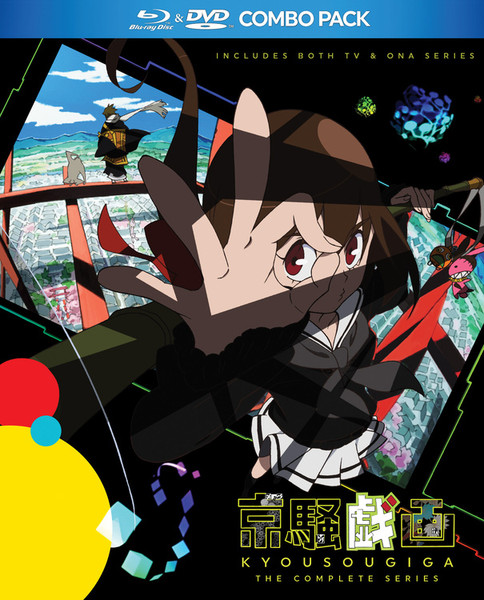
I’d always heard that there was one other show that she directed but I never got around to watching it. One day while walking through a movie store, I found a copy of a series that immediately caught my eye. Something about the art and its dynamic composition spoke to me and I thought it looked familiar. Sure enough, when I looked it up on my phone, there she was.

Kyousougiga, a Toho Animation series directed by Rie Matsumoto. Just recently I took the time to dive into it and get a sense of what an original work of hers looks like. Additionally, today I want to look at Matsumoto’s career past and present to get a better sense of her style and where she comes from.

Continue reading

I Wanted to Love Fire Force

I have tried to watch Soul Eater on four different occasions and the farthest I’ve gotten is episode four. When I tell my friends this, they are surprised (for good reason). I have long been a huge fan of the works of Studio Bones, with two of my three favorite shows of all time having been made by them. I’m also a huge fan of sakuga and consider it to be one of the coolest things about watching anime. Most importantly, Takuya Igarashi is one of my favorite directors of all time.

That I was unable to get into a show applicable to all three above qualities is entirely explainable but still a head-scratcher. Especially if you’ve read any of my posts on Studio Bones in the past, it seems like a show I would love. The short of it was that the writing and characters did nothing to draw me into the show and I was somewhat bored.

But when I saw the trailers for David Production’s adaptation of Fire Force – another work from Soul Eater author Atsushi Okubo – I got excited. The artwork and music conveyed a darker tone and got me thinking that a different kind of story by the same creator might be more to my liking. Hell, it already looked like a show by Bones anyway and David Productions has been growing steadily thanks to stuff like Jojo’s Bizarre Adventure. Fire Force quickly became my most anticipated show of the summer.

Now, as Fire Force‘s first season nears the midway point, I’m left a little underwhelmed. How did such a promising show fail to meet my expectations? More importantly, is it good enough to continue watching?

Continue reading

A Review of Lord El-Melloi II’s Case Files

Worldbuilding is something I get unusually excited about when it is done a certain way. I’ve often ranted about shows like Kekkai Sensen, which depict the supernatural chaos, yet systems of government designed to efficiently counter the chaos. There is a multitude of minor elements of world-building that excite me but it is exceedingly difficult to put into words why. The closest I get is saying that I love the idea of order applied to an unnatural society

Kinoko Nasu, the creator of Fate/ Stay Night, Garden of Sinners, and Tsukihime, has written works tailor-made to cater to me. He has created a modern fantasy universe the complexity of which rivals the works of Rowling and Tolkien. In fairness, the Nasuverse is bloated, with so many alternate universes and different creative minds, but there is still beauty in the chaos.

This past summer, studio Troyca’s Lord El-Melloi II’s Case Files gave me this episode-to-episode joy built entirely on showing off how cool the world is. What I thought would be another misfire in an already packed franchise turned out to be one of my favorite shows this year.

Continue reading