So earlier today, I watched the new trailer for Daemons of the Shadow Realm, the new Hiromu Arakawa adaptation, and unsurprisingly, it rocked. Though crucially, I don’t believe it’s just because of Arakawa’s namesake. Don’t get me wrong: Fullmetal Alchemist‘s acclaim and staying power in the cultural consciousness are a testament to some wonderful writing, but they’re also inextricably tied to the artistry of Studio Bones. Frankly, if it weren’t Bones – oop sorry, Bones Film – handling this adaptation, I might actually be less excited, if only because few studios can evoke such trust in me by reputation alone.
Like, honey, look at the material. Mob Psycho 100? My Hero Academia? Noragami? Kekkai Sensen? Star Driver? With a resume like this, even something as huge as Fullmetal Alchemist is practically just a blip on the radar. Glazing aside, Daemons of the Shadow Realm‘s anime has only done itself more favors the more that’s been shown, and all from Masahiro Ando, the director of one of the studio’s greatest gems, Sword of the Stranger. Plus, with music by Kenichiro Suehiro of Fire Force and Re:Zero fame, it will probably be one of the best soundtracks of the season.
But none of that is what really caught my eye. I wasn’t even gonna write about it. If anything, I was planning on writing about Gachiakuta and My Hero Academia dominating this season (and I still might). No, what really caught my eye were the final words of the trailer: “Airing for two consecutive cours starting in April 2026”. It’s just a simple detail, practically obligatory, to disclose the release date and whatnot, right? Right… But somehow it felt more like the answer to a prayer. Cause like, has anyone else felt like anime seasons used to be longer?
The Perceived and Demonstrable Decline of 2-Cour Anime
Back when I first got into anime – about a year in, probably – it felt like every new show I binged fell into one of two categories: 12 episodes or 24 episodes, give or take. Later, I’d learn to just call it “one-cour versus two-cour,” and I was thankful to save on syllables. At the best of times, one-cour anime felt tight, concise, and just as long as they needed, if a bit rushed occasionally. Conversely, two-cour anime felt like a real saga, by the end of which the show might look completely different and take a huge departure that either made everything better or led to a really divisive ending.
Somewhere down the line, though, for a myriad of potential reasons, two-cour anime started getting less common, probably around the latter half of the 2010s. It felt like everything was 12 episodes. Even when they technically weren’t, they were split crudely into parts, a trend only intensified by streaming service release strategies. On that note, sometimes, the two halves would be called separate seasons, yet distinctly feel like they were produced at the same time, and only made separate to spread out hype at the cost of narrative flow (see Dandadan Season 1).
Am I Talking Out of My Ass?

But is this observation of mine entirely fair? Those first two or three years of being an anime fan saw me binge through more TV in a few months than I’m likely to watch in a year at this point, and my exposure to this medium was spread across decades of media. Surely, my perception of average season lengths was skewed as I indulged in classics from across time, intermixed with whatever smaller projects crossed my path, right?
If you put a gun to my head and forced me to say which is more common, I feel like one-cour anime are (probably) universally more common. Practically speaking, 12 episodes is a safer investment than 24, and if sensations like Sword Art Online are any indication, sometimes the second half can ruin a good thing. But be that as it may, I would say I’ve noticed a decline in consecutive two-cour anime over the last decade since I got into the medium. And it would be one thing if this were simply a sign of changing times and sensibilities, but more and more, it feels like a reflection of the industry and the limitations therein.
The One-Cour Phenomenon
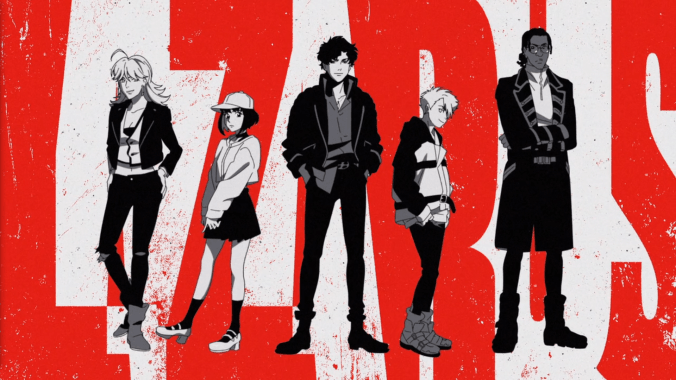
There are times when I finish a show and think, “damn, that should have been twice as long.” Take, for instance, Shinichiro Watanabe’s Lazarus, the Adult Swim original that I critiqued harshly but lovingly, and which definitely needed more time to flesh out its ideas and especially its characters. And that’s just an example of an original series being criminally short, a segment of the medium that already faces uphill battles. Even manga adaptations feel shorter on average these days, especially in shonen, a genre that is undergoing some big changes from generation to generation.
We could go on about how shonen manga is changing, but let me stay in my lane and talk about how shonen anime has changed in this shifting landscape. Consider Dandadan, Chainsaw Man, Hell’s Paradise, My Hero Academia: Vigilantes, Kaiju No. 8, Sakamoto Days, every season of Demon Slayer beyond the first, and even the newest season of Fire Force, just to name a few. They’re all around 12 episodes, give or take, or they’re the first half of a season crudely split in twain.
This Has Happened Before
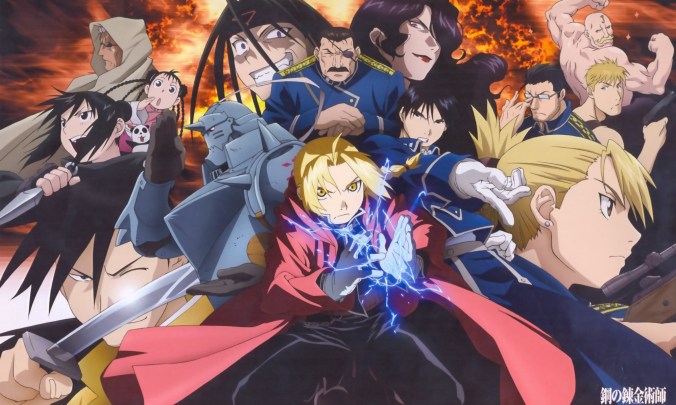
And it’s not as though a seasonal structure has always been de jure in shonen, be it one cour or two. The youngest anime fans today might not realize it, and I certainly forget it myself from time to time, but there was an age when shonen just aired continuously, week by week, until it didn’t, or until filler happened. Why do you think filler was even a topic of discussion to begin with? It’s because anime was produced differently. Fullmetal Alchemist: Brotherhood was 64 episodes, but it started and ended in just over a year with barely any breaks.
Disregarding the constant that is One Piece, that just doesn’t happen much anymore. The last ones I can think of off the top of my head are Black Clover and Boruto, only one of which I can assume is beloved with any confidence (and it ain’t Boruto). So why? There are plenty of possible explanations, but here’s my rough theory. There’s a lot of anime being made today and more demand for it than ever, so production committees need hits, and lots of them. And, because those investments need to pay off, we can’t always make the time to produce longer seasons.
Sure, shows like My Hero Academia and Jujutsu Kaisen have had two-cour seasons in recent years, but these shows strike me as the holdouts. My Hero Academia, in particular, strikes me as a very “traditional” shonen, at least compared to the wave of newer stories from younger authors, who are changing the way we view the genre. Hell, even Jujutsu Kaisen is one of those stories, at least in terms of its total length, among other aesthetic and narrative qualities. Then again, seeing as how its next season is called “The Culling Game, Part 1,” maybe it will be 12 episodes too, and considering the concerns over working conditions, maybe that’s a smart move.
Why Does It Matter, Anyway?
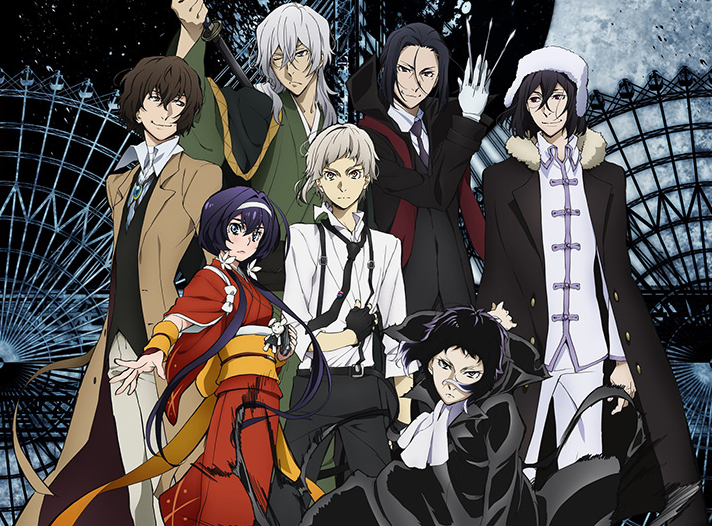
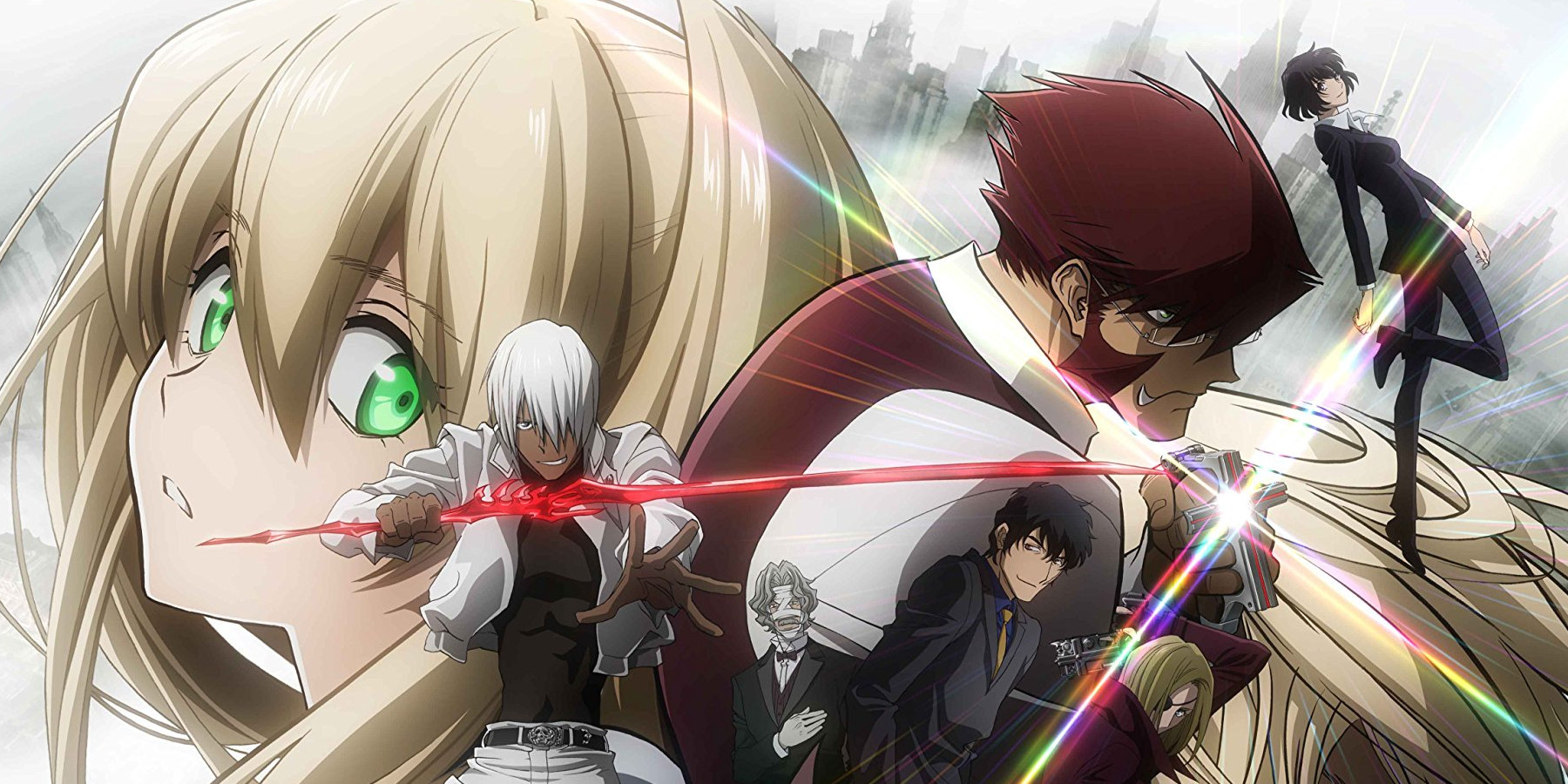

It should be stated that I have no issue with shorter anime seasons most of the time. Some of my favorite shows have been released in single-cour seasons that were just enough to leave me satisfied, especially if I didn’t have to wait too long for more. Kekkai Sensen, Snow White with the Red Hair, Bungo Stray Dogs, Mob Psycho 100 – all of these were single-cour and they became instant classics for me (all of which are Bones shows as well, which… again, damn). However, the difference between a show that complements a single-cour structure versus one burdened with fewer episodes is astronomical, and I’ve noticed the latter far more frequently in recent years.
Since I’m a broken record, let’s talk about another Bones show: 2024’s Metallic Rouge. I hated this show, and I even started writing a huge review of it that I never got around to finishing, and probably never will. It’s an original series that was pitched as the centerpiece of Bones’ 25th Anniversary, and considering their reputation, which I have painted pretty clearly, that sets some high expectations. Unfortunately, it was underbaked, rushed, and felt like a waste of time, hawking a cluttered and incoherent plot as if it were some gripping mystery. Much like Lazarus, it was an original project that should have been longer to explore its ideas and justify itself.
Does More Time = Better Story?

By this point, even if you agree that two-cour anime are less frequent, you may be wondering how having two cours is supposed to be an improvement. Besides extended exposure to a story over time, what objective benefit does it really provide? To that, I would say, at least partially, that its chief benefit is exactly that. It’s more time with a story; more weeks spent in anticipation, more time to explore certain ideas, and more episodes, covering more ground from the source material. Plus, not every story can be adapted to have a satisfying cliffhanger by the 12-episode mark. Not every story should.
Take, for instance, this year’s Gachiakuta, a series whose first two episodes were given a 6 out of 10 by IGN, which rustled a lot of feathers, but I kinda get what they mean, even if I disagree. And I only disagree because I think we’ve forgotten what it’s like to let TV shows work up to their potential. This extends beyond anime (for example, it feels like shows aren’t allowed to have mediocre first seasons anymore). Shonen stories are supposed to start small, but with big promises worn on their sleeves that the source material and the anime both labor to pay off in big ways.
- If you start your show with a kid with no superpowers in a world where everyone has one, but with the promise that he will become the greatest hero, you’re probably gonna have him steadily acquire greater strength and conquer bigger threats with powers that he will destroy his body to prove himself worthy of.
- If you open with a light-hearted dude with abnormal physical strength and introduce him to a world of sorcery and dark spirits, with the promise that he might be executed at the end of the story to quell the evil resting within him, you’re gonna have to test that boy’s resolve in the face of a messed up world that will not wait for him to grow up before crushing his spirit.
- If you begin with a boy losing his entire family and clinging to the hope that his now-demonic sister can still be saved and live a full life, a promise that feels desperate and impossible in the moment, the story is probably going to thrive on making the impossible possible as passionately as possible.
There are as many examples as there are stories in this genre, but the point is that Gachiakuta‘s beginning was good, if not necessarily amazing. It was simple, and it was enough to tell us what we needed to know about our lead, Rudo. In my post about the show’s first episodes, I praised it for taking its time to adapt the early chapters, and I never worried about how much ground they’d cover because I knew they had 24 episodes to work with. It’s really as simple as that.
Why Gachiakuta Needs 24 Episodes
Sure enough, with the first half concluded, I can safely say this was the right call, for a very important reason. I loved Episode 13 to the point that I’m considering writing another blog post just about Amo’s backstory, how unexpectedly dark it was, and how impressed I am by the execution of such touchy subject matter. However, in another dimension where this was the cliffhanger to a shorter season, I can imagine being very underwhelmed, no matter how compelling the material. It wouldn’t have made for a very climactic end.
I get the impression that the team at Bones knew this and that 24 episodes were ideal to explore the story more deeply, tackle another arc or two, and hopefully end on something bigger. Compare that to Dandadan Season 1’s flaccid cliffhanger, where Momo was about to get assaulted at a hot spring, and where Jiji and Okarun found a creepy hole in a house. It was so underwhelming that by the time Season 2 aired this summer, I never started it, despite loving almost everything about the first season. I didn’t even bother going to the theatrical preview event this time!
Obviously, that’s partially on me, but my point is that if both seasons were just one, I wouldn’t have felt burned at all. I’d have just thought, “Cool, can’t wait for next week’s episode.” Maybe the second half wasn’t finished, and I get that. Not every production team is the same. Not every studio is the same. Not every anime is privileged to have a generous enough production timeline to create a finished work that is not only polished but consistent (and without bordering on slave labor). I’m not even qualified to say whether that is or is not the case for Gachiakuta.
The Trouble with Asking For More

Your favorite animation studio has probably had crunch time. Same with your favorite game developer. Art takes time, and sometimes it demands it, the call for which some artists answer eagerly out of passion and a desire to pour themselves into their craft. Naturally, though, optics are a bit different when suddenly the crunch time is mandatory, at the behest of executives or creative leads. It turns into less of a labor of love and just… labor. People talk about studios like MAPPA in relation to overworked and underpaid artists, but it’s an industry-wide problem, the full scope of which I am still ignorant of. I love Bones, but I bet they’ve committed the same sins.
So I don’t want to sound as if I’m selfishly asking for longer anime. What I want are longer seasons of TV anime whose productions are given an abundance of time and resources to create truly unforgettable art, be it adapted or original. Furthermore, in a time where people talk about the science of overstimulation and the shortened attention spans of audiences, I don’t think we need to be so quick to capitulate to the trend in terms of how we pace narrative. Previously, I’ve written about how shonen anime are getting shorter and why people want that, but I’ve also expressed why longer stories, ones that feel like a commitment, are just as important and worthwhile.
The New Rise of 2-Cour Anime
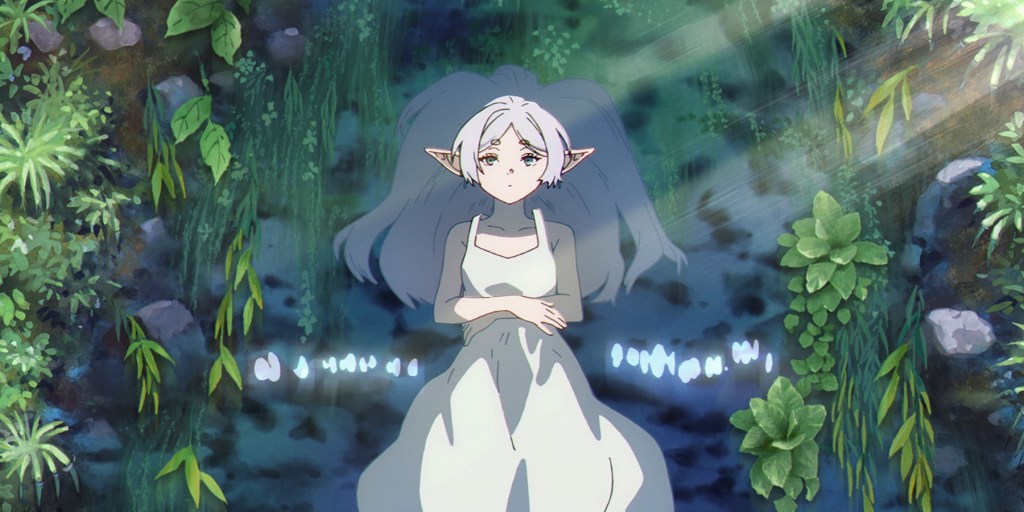
Frieren: Beyond Journey’s End was the best anime of 2024 (in my opinion, but like, come on). It was also one of the longest I’d seen in a hot minute. We’re not just talking about two cours, but a whopping 28 episodes, the first four of which were released in one go for people to binge and get hooked, setting up the main quest of the series. Then, it was released weekly and lingered for half a year; half a year’s worth of heartwarming character drama and excellent action. It was the moment Studio Madhouse came in and said, “We’re still a legendary studio, bitch,” and I thought I was dreaming, seeing a show produced this well, this consistently, for this long.
It might sound dramatic and hyperbolic, but there was a part of me that was convinced I wouldn’t see a show like that again, at least not for a long time. Frankly, that was the moment that I should have seen the tide shifting, and now here comes Bones leading the charge. And hey, as much as I love My Hero Academia, and I truly LOVE that story, I am very excited to see what this studio will do after it is finally finished. Who knows? Between Gachiakuta, Daemons of the Shadow Realm, and whatever comes after, we could be witnessing a new renaissance for Bones.
Above all, though, I’m excited for new stories that will take their time to win audiences’ hearts. To parrot my words from the end of my Gachiakuta post back in August, some of my favorite artists in the medium are working on new projects right now. It’s a wild time to be an anime fan, and I can’t wait to write about every one of them and more.
Hey there. How are all of you doing? Consider that your prompt for the comments below. Seriously. With all the awful things associated with just being alive in the world today, you take what you can get, but when it comes to the stories that entertain and inspire us, that doesn’t have to feel like a concession. For me, the stories of others, and the ones I’m trying to write myself, give me the courage to take every day head-on, and I hope you all have found something similar to center yourself, be it media or some other method of taking care of that brain of yours.
Thank you so much for reading. Stay healthy, stay safe, fuck ICE, and as always, I’ll see you in the next one.
 Sakura Sunrise