Warning: The following contains spoilers for My Hero Academia Final Season, now streaming on Crunchyroll. Some sections are more spoilery than others, so I’ll try to label when I’m diving into the thick of things for those who might just want my general thoughts on the season as well as the series at large.
This coming April will mark 10 years since the TV anime adaptation of My Hero Academia began at Bones Studio C, the same production house that gave us Fullmetal Alchemist (2003), Soul Eater, and Ouran High School Host Club. And nearly just in time for that anniversary, the series has concluded its eighth and final season – the shortest, in fact, at 11 episodes. 11 episodes of dazzling spectacle, heartbreaking sacrifices, and monumental strides for its world and characters, and not a single week passed that the gravity of it all did not bring me to tears.
When it started, I was in my senior year of High School. I loved all the characters, I loved the animation, and I had a crush on Deku, because he was (and still is) adorable and ideal boyfriend material. Now I’m approaching my 30s, and despite the uncertainty of the future, for which this series’ text aptly latched onto as it progressed, I’m living my best life. While I wouldn’t go so far as to say that My Hero Academia contributed to the heights of my life at this juncture, I wouldn’t hesitate to say that its whimsy has helped lift me along the way. It is a story that found me at the right time and grew with me, becoming more resonant than I ever expected.
Not many of my friends kept up with the series as long as me, so I savored this ending largely by myself. As the credits rolled, though, I strangely felt more connected to my friends and peers in the anime community/industry than ever before. I’ve never claimed to be an authority on the shonen genre. I never fully watched the big classics like Dragon Ball Z, Naruto, or Bleach, despite how much their hypest moments have tempted me to binge them. I’ve delved into the discourse, fed off the enthusiasm and second-hand nostalgia, and I have offered what I hope are informed takes based on these observations, to say nothing of my experience with newer shonen. Ultimately, though, I’ve never felt like a “real” shonen fan.
I’ve watched the newer crop of stories, like Jujutsu Kaisen, Dandadan, and Chainsaw Man. But before all of those, I watched My Hero Academia. It was the first long-running shonen I committed myself to, and I was so happy to be on the ground floor of a series that I expected to air for a long time. There were other shonen classics along the way, of course, Fullmetal Alchemist being a big one, but that was a much less daunting commitment. On the flipside, My Hero Academia lingered. It grew, triumphed, stumbled, bounced back, stagnated, then hit even harder, and when it was over, I thought to myself, “So this is what it’s like to be a shonen fan.” It was a revelation as much as it was an affirmation. I was already a fan. The difference was that now, it felt more real than ever, having reflected on a decade spent with these characters. It was beautiful, and it hurt, and I loved it.
Not A Review, But A Perspective
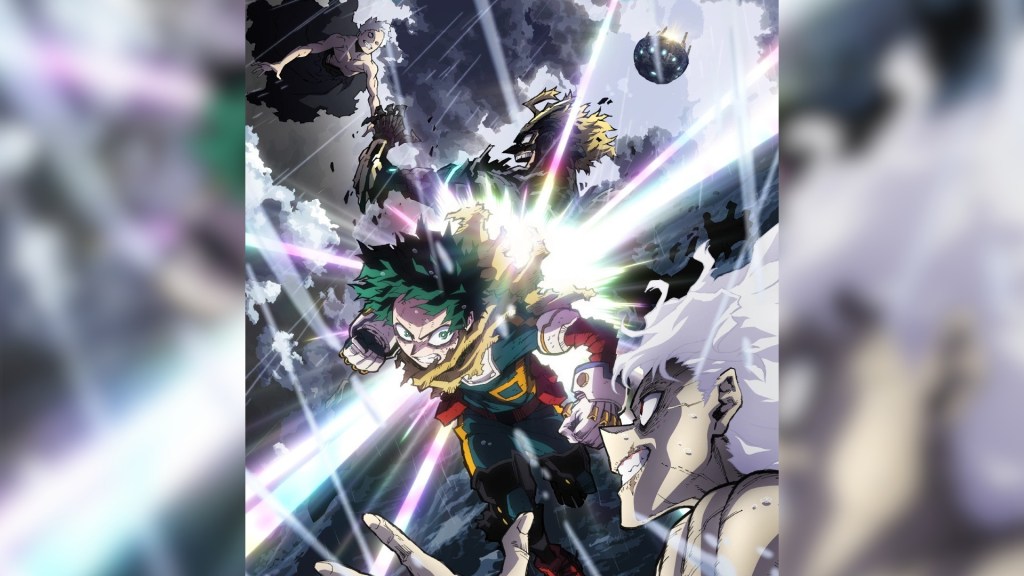
This is not a typical review for me; it feels more personal than that. Funnily enough, when my time at Game Rant ended, I recall thinking, “Damn, I really wanted to review the final season just like I had Season 7.” Now, though, I’m a little bit grateful that it’s a review written of my own volition rather than a professional obligation. It gives me some room to add my own voice and provide the necessary texture to understand what this finale meant to a fan, in addition to offering a more objective critique. This season wasn’t perfect (it just felt pretty close to it).
In my review of Season 7, the biggest problems became apparent early on, and these were the same issues that had plagued the anime for years. An overabundance of verbal exposition, the repetition of said exposition, and the flashbacks to previous events – either ones we’d already witnessed or new ones that nonetheless distracted from the present circumstances. What made Season 7 fantastic despite all that was its capacity to rise above its weaknesses as it went on, delivering gutpunch after gutpunch. It found its stride and never stopped sprinting until the end. All the final season had to do was keep up the momentum.
A Troubling Start, Overcome Instantly

So imagine my concern when Season 8 opens with effectively a recap of the battle between All Might and All For One. It was already a fantastic fight last season, but with the total number of episodes in this season still uncertain by the time of the premiere, a troubling thought occurred. How much might the pacing suffer to adapt an altogether small number of remaining chapters? As it happened, not much. Season 8’s premiere was alright; half recap and half a continuation of a gripping fight that left us hanging a year prior. But past that threshold, fuck… they really knocked it out of the park.
Earlier this year, I wrote about To Be Hero X and called it the best superhero story of the year, only to kick myself when I remembered this season was right around the corner. I still stand by every accolade I threw at that show, but so much of what I loved about To Be Hero is made up of what I also love about My Hero Academia. They both critique heroes, but, unlike lesser, more cynical, nihilistic, and violent stories in the genre, these stories are crucially made by people who actually like superheroes. This is something I will always prefer because it’s more earnest and makes said critiques feel productive rather than mean-spirited (and yes, I am throwing shade at The Boys).
“The Wind Was Blowing”
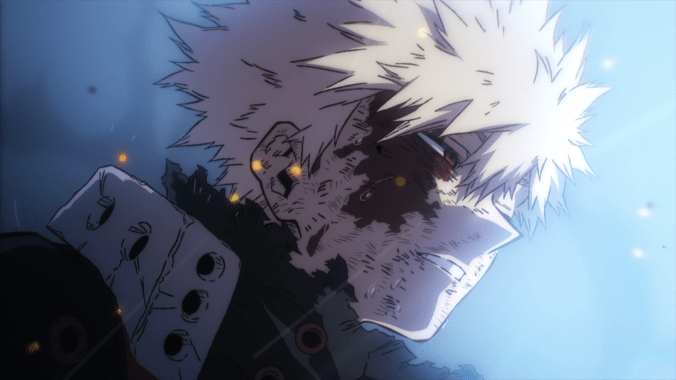
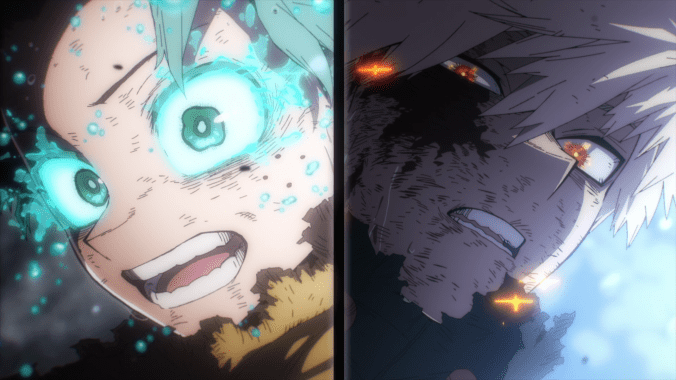
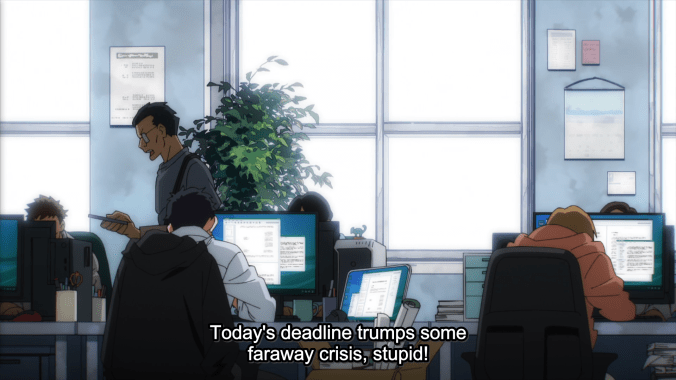
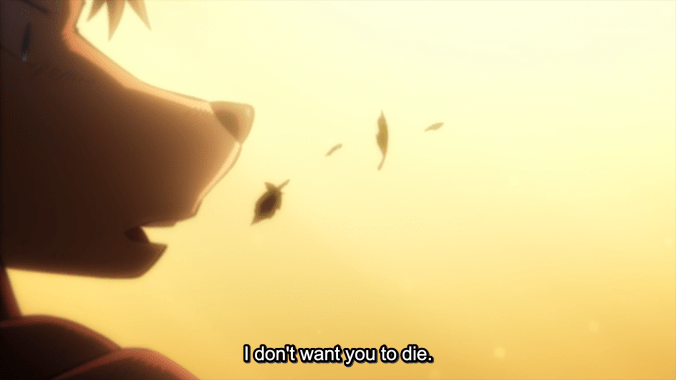
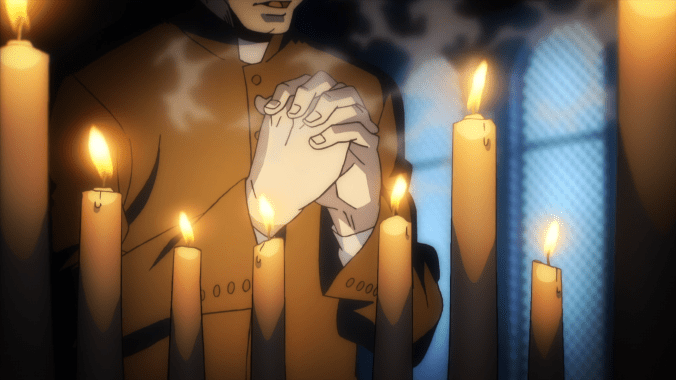
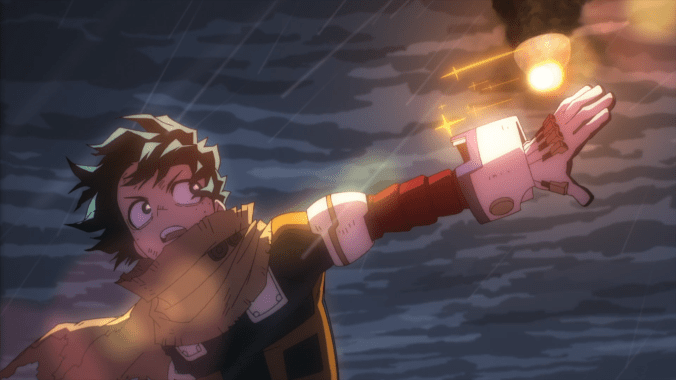
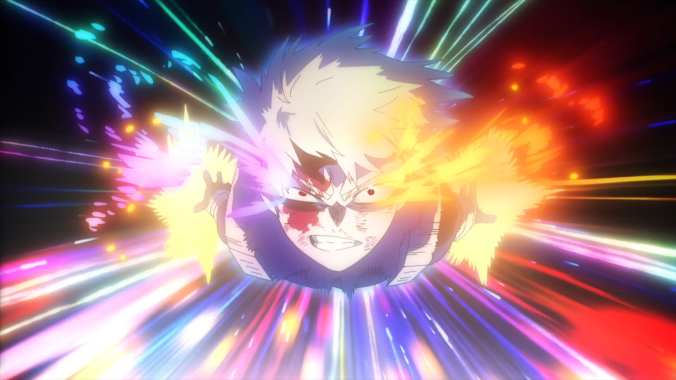
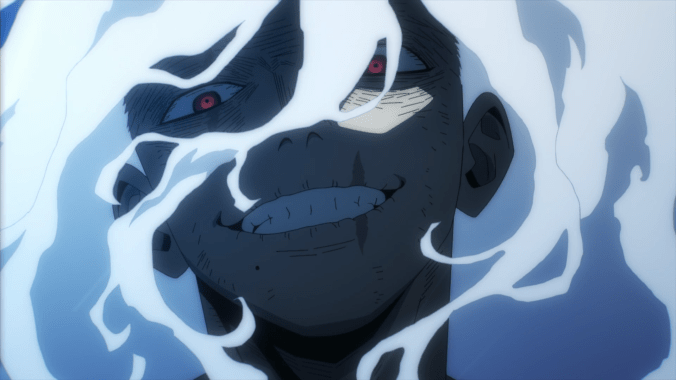
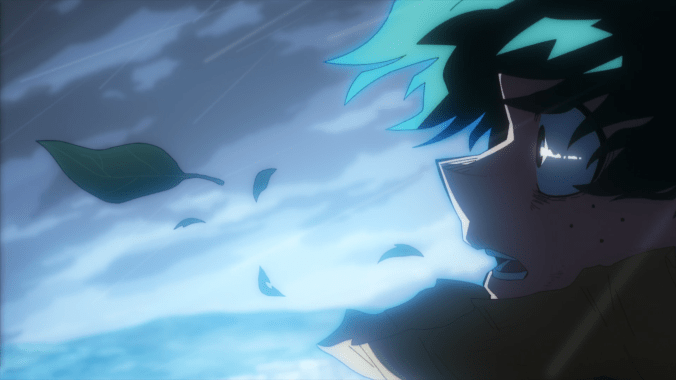
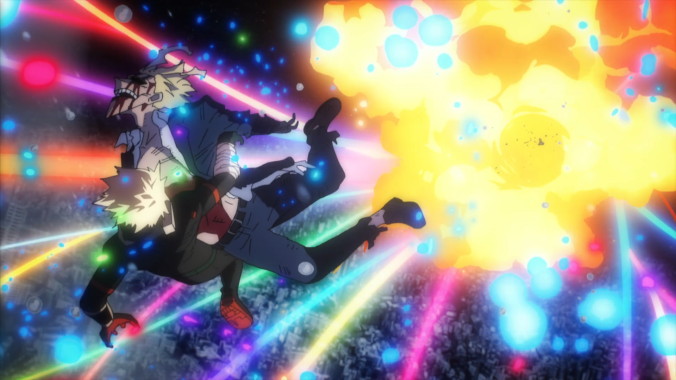
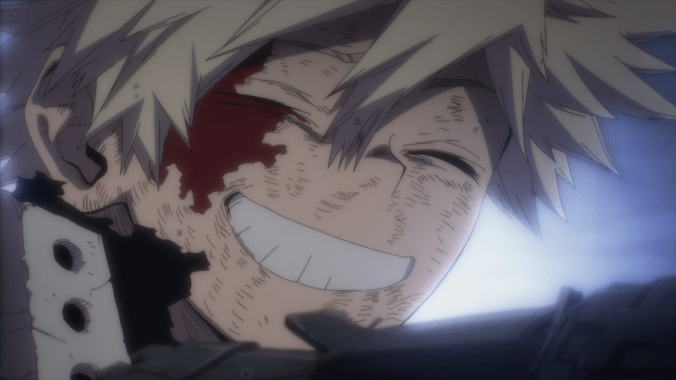

The third episode of Season 8, “The Final Boss!!”, illustrates this perfectly. It’s probably one of the greatest episodes of the series, if not the greatest episode of anime this year. By its visuals alone, it is a triumph of animation. Still, the visual storytelling and the creative team’s commitment to conveying the stakes of this battle on a global scale are what make it a masterpiece. We witness people from every corner of the world, young and old, watching the battle with bated breath. Some go about their days as usual, unaware of what’s at stake, but that distraction is a luxury itself. Those without it, who must look and who can’t bear the thought of looking away, offer something so small and perhaps trivial; the only thing they can.
Call them prayers, wishes, or desperate pleas, but all around the world, people are witnessing the final battle, just like the audience. Yet, even with a fraction of the investment we have, the in-universe spectators can’t help but root for Deku. It’s powerful, not only because the artwork and music are so sublime, but because this sense of dread and this flickering flame of hope have lingered and saturated so much of the arc. It’s far from just a motif or a theme – it is a sermon that speaks to the core of why people believe in superheroes.
The spectators’ hopes for the heroes’ victory are carried on the wind itself, a motif symbolic of some force beyond our understanding, be it fate or a higher power. It’s as if entropy itself is converging on the final battle. On a thematic level, it’s a kind of visual abstraction bordering on the spiritual. On a character-centric level, it’s also the moment that Katsuki Bakugo completes his long, arduous, and at times vexing character arc, and as much as I disliked him at the beginning, I wouldn’t change a single thing about his journey. That’s how good it is and how much I came to love him by the end.
All Eyes Are on Deku
On the topic of character moments, one of my favorite things about Season 7 was – oddly – how Deku was almost a supporting character. That season was largely concerned with the supporting cast, capping off arcs that were seasons in the making, and even taking the opportunity to learn more about characters we hadn’t spent as much time with. Everyone got their time in the spotlight, which is always wonderful to see, especially in a show about how anyone can be a hero. By contrast, this season is all about the final battle between Deku and Shigaraki (apart from All Might and Bakugo’s respective duels with All For One, that is).
However, in conjunction with what I said previously about the emphasis on the spectators of this battle, the supporting cast is more important than ever in adding legitimacy to this climax. One of my favorite scenes, and one that made me tear up just from the trailer, was one between Kaminari and Yaoyorozu. The latter is giving the former a shoulder to lean on as they get to safety, watching Deku’s battle on a smartphone. Kaminari says that in every story he grew up on, this is the moment where he should be cheering on the hero. But instead, he’s just afraid, and that brings him to tears, fearing that he doesn’t have enough faith in his friend. It’s such an honest, vulnerable, and human moment, and one of many that save My Hero Academia from a far more dull finale.
The Uphill Battle of Bringing a Shonen to an End
See, shonen has a “problem” of which the scale and validity are up for debate, in that its stories build and build to these grand climaxes with villains of ever-increasing strength. There are entire essays written about the final bosses in anime and manga: the good, the bad, the overpowered, the underwhelming, etc. Depending on your tastes, these villains can be interchangeable in that regard. For every person who finds My Hero Academia‘s final arc exhaustive, there are people like me who think it’s excellent. And weirdly – perhaps controversially, I think this final season works less so because of its action, and more because of its script.
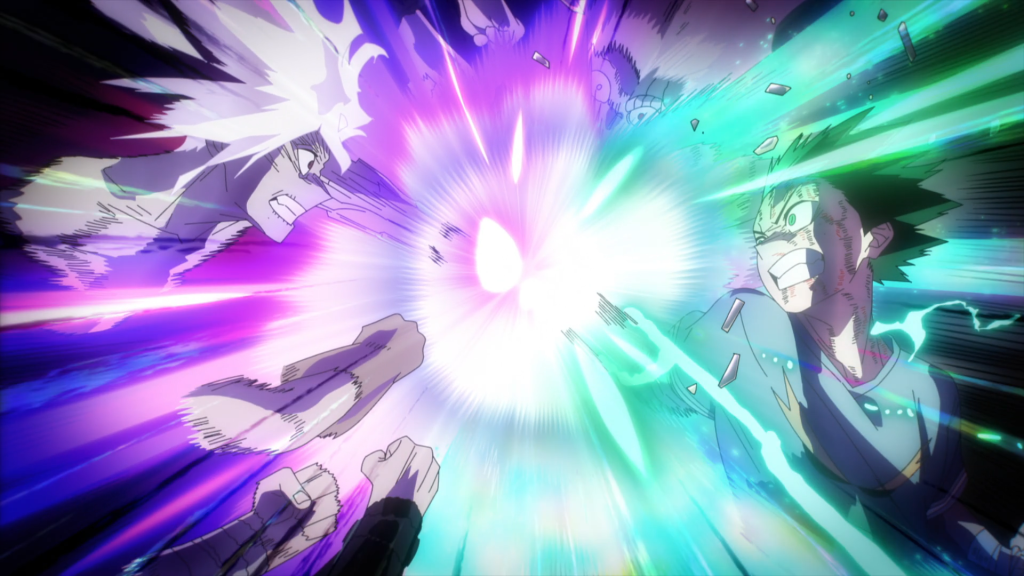
There were times this season when I felt like the animation probably could have gone a bit harder, especially knowing what the series has pulled off before (in just this same season alone, too). With that said, I rarely minded, largely because of how the creators chose to tell the story. That aforementioned scene with Kaminari, as well as the scene preceding it, with Eri and Kota, is intercut with Deku unleashing an onslaught of attacks on Shigaraki. The animation is great, but it’s audioless; its soundscape is eschewed for the discourse between the characters. Some felt that this undercut what could have been an epic fight, and initially, I felt the same, but the more that I sit with this moment in Episode 165, the more I respect it. The fight wasn’t as important as what the fight meant to those watching, and what lessons they’d take away from it.
What Makes The Ending Truly Special
[Heavier spoiler territory ahead, be warned]
When the manga ended last year, it was hard not to be spoiled on certain things, and like with every major shonen coming to a close, everyone had a take. I remember hearing one reading of the text that intrigued me and that, in tandem with my emotional journey experiencing Season 7, gave me a rich idea of what to expect from the ending. From what I’d heard, I braced myself for a tragedy, albeit one rich with purpose and, most importantly, consistent with what I’d seen from this story since the beginning.
The thing about spoilers, though, is that the degree to which they unmask a story and its capacity to move you is all extremely relative. As it happened, My Hero Academia‘s story is far too large, and its individual pieces far too numerous, for the spoilers I received to ruin this ending for me. If a story is a jigsaw puzzle, then spoilers are parts of the puzzle that are solved before you can get to them, but the size of those parts can vary. For me, the spoilers barely mattered, and I was treated to an ending that I struggle to imagine being any more satisfying.
What My Hero Academia’s Ending Has to Say
I’m beating around the bush, but I already put a spoiler warning, so let’s have at it. Ever since Season 2 and the introduction of the Hero Killer Stain, My Hero Academia has been increasingly critical of its world. The League of Villains may have sown chaos at every step of the journey, but they were also compelling and even at times likable precisely because they were evidence of their society’s failures. Toya Todoroke, the son of the hero Endeavor, turned into the villain Dabi because of his father’s failings. The Todoroki Family drama, a throughline across multiple seasons, is not just an uncomfortably intimate reckoning with abuse and trauma. It is a condemnation of this society; the ugly truth beneath the glittering veneer.
Tomura Shigaraki may not have been my favorite villain for a long time, but he grew to become my favorite. I didn’t just want him to be stopped, but saved, because it’s what Deku wanted. Because, unlike the cruel world that created Shigaraki, Deku knew that deep down, there was a crying child inside him who just wanted help. It’s the same reason that Uraraka wanted to help Himiko Toga. Himiko was just a girl with abnormal tendencies stemming from an abnormal power. She was failed by her parents and failed worse by a system that refused to treat her like a child who needed help. Instead, she was treated as a freak and became a villain because of it.
The Ending I Expected…
Comic books love villains like these because, in their tragedy, there are lessons to be learned, and empathy to be salvaged in the wake of their battles with heroes. But what these lessons are and who is meant to learn them can make all the difference, and for My Hero Academia, the lesson is pretty clear. The previous generation failed, and now it falls to the next to build something better. Furthermore, the onus is on the previous generations to contribute to that future with whatever power they have left, and to elevate those who come after.
None of this is necessarily original, but it is spoken passionately, earnestly, and through the prism of superhero fiction, a rich well of inspired tropes and morals from which to articulate the message. It’s especially powerful because, before seeing the ending for myself, I was so convinced that it would be more bittersweet or even flat-out disappointing. I feared it would be an ending where our new generation was made the stewards of a world that hadn’t ultimately learned its lesson. Sure, the villains are defeated, but what about the underlying causes? Without tangible proof that things would truly be better, would it really be a happy ending? And would that ending be without merit?
… Versus the Ending I Got
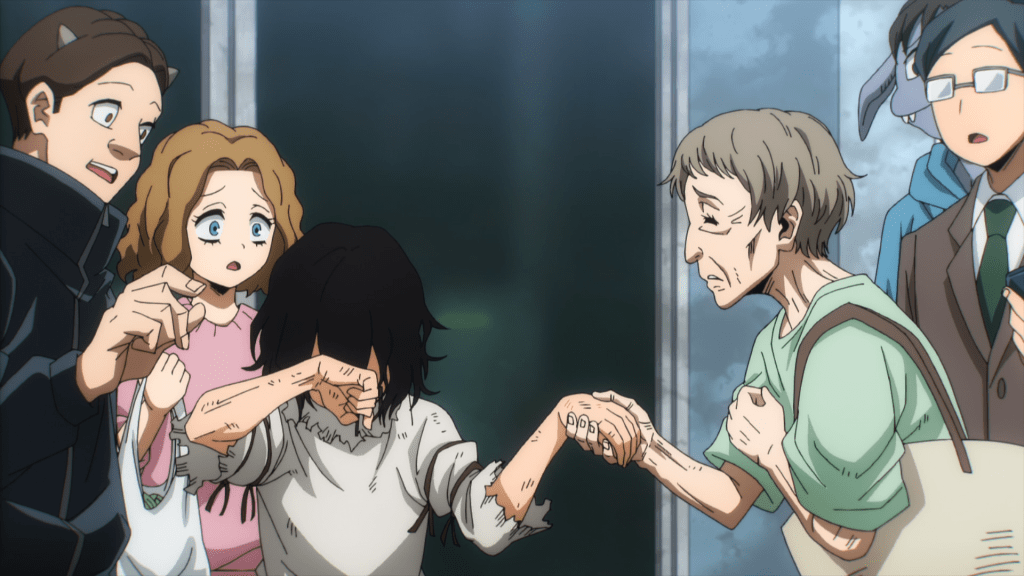
As it happens, these were questions that I didn’t need to answer, because My Hero Academia‘s ending is a happy one, and I don’t know why I expected any differently. To each their own, but perhaps the readings of the text I was exposed to when the manga ended were projecting just slightly. Yes, some losses weigh heavily on the heroes; complicated people who might have lived beautiful lives if they could have been saved. Yet, consider the ones who were saved: Gentle Criminal and Lady Nagant, for instance. They were saved because of Deku’s kind heart, and their willingness to aid in the final battle made for one of Season 7’s high points.
So, what of the systemic flaws rooted in this fictional society? Well, just about every one of them is addressed, and the work being done to fix them is actively underway by the time it skips years into the future. Quirk counseling, radical reforms to the hero rating system, and, on a broad scale, a larger willingness among regular citizens to extend a helping hand to those in need. Fittingly, it’s the main characters of Class 1-A leading the charge, which isn’t to say that the older heroes are absent from this push for change. This ending is not a tragedy, and it’s the furthest thing from a failure. It’s progress.
The Final Episodes
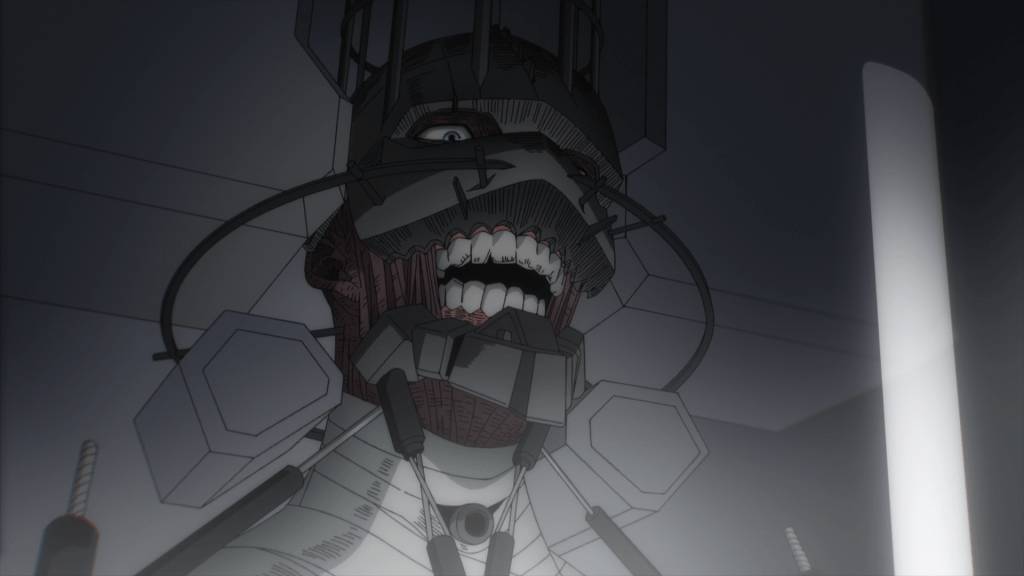
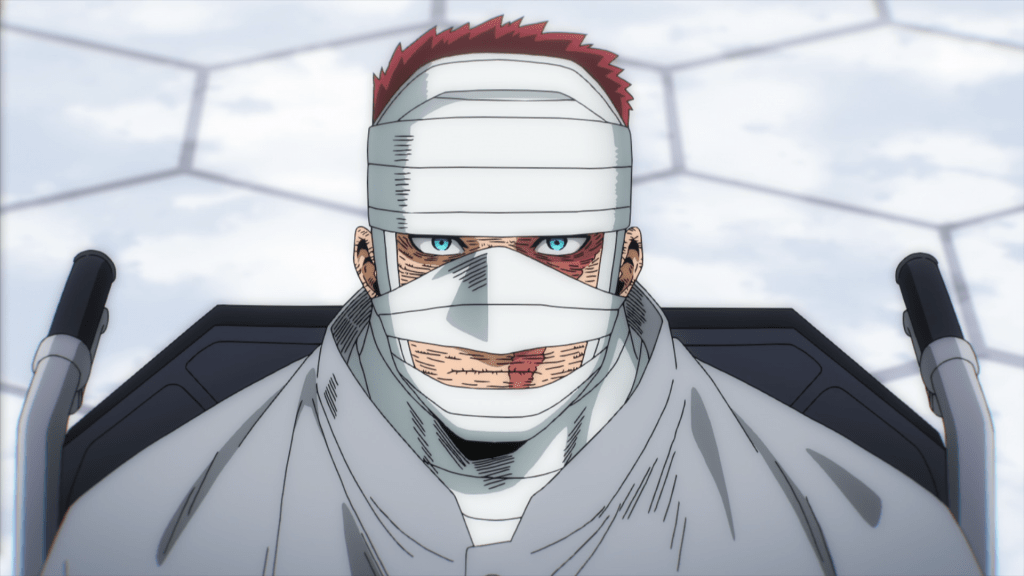
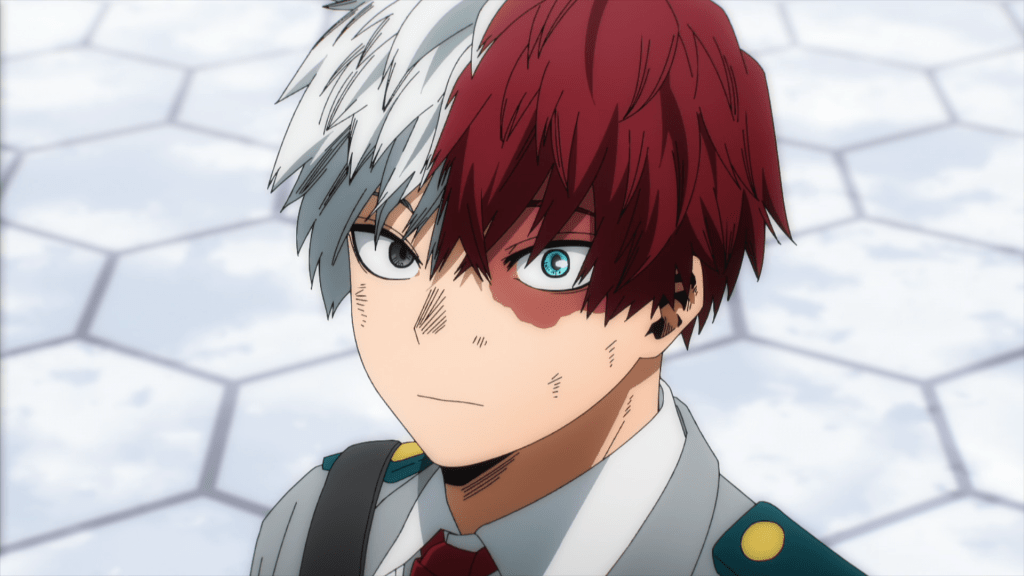
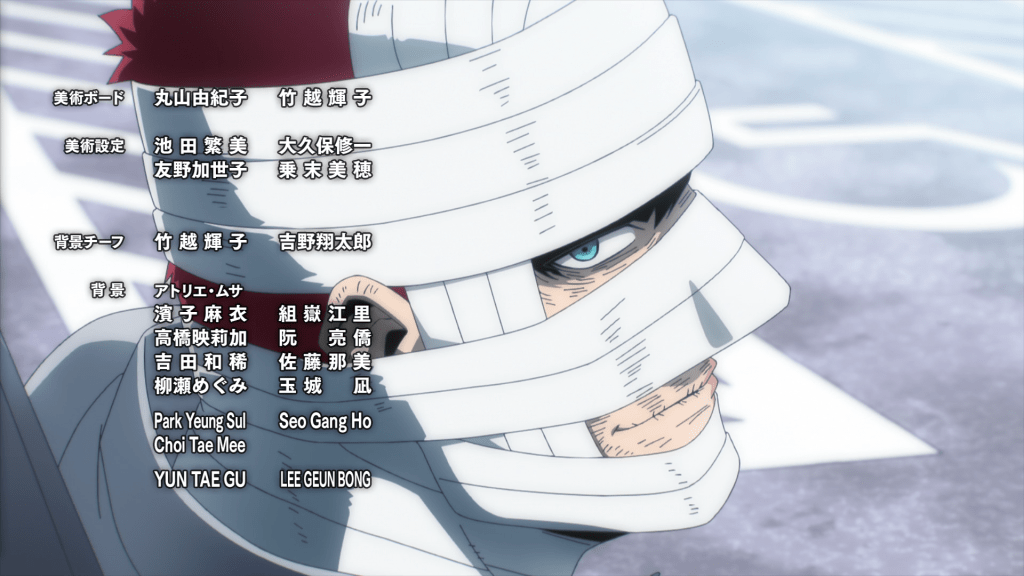
I love a good epilogue, especially one that knows how to take its time. Three episodes to cap off nearly a decade of characters, and one chapter whose very namesake is earmarked for putting to bed the Todoroki family arc. Endeavor may be hated by a great many fans, but one does not have to love him, much less like him, to feel inspired by his will to atone for his past sins for the rest of his life. His eldest son doesn’t magically forgive him; some wounds will never heal, but they all recognize their father’s willingness to try, especially Shoto. This is one of the boldest, bravest, and most maturely handled arcs I’ve ever seen from anime, and I respect the hell out of Kohei Horikoshi for committing to it.
Next up, the penultimate episode. I might not have much stake in any potential romantic pairings in this series, and it’s not as if the text commits to any to begin with, but Deku’s heart-to-heart with Uraraka was beautiful. Their shared mourning of villains they hoped to save, Deku telling her that she is his hero, and the arrival of the rest of the class all culminated in a storm of emotion that hit me quite unexpectedly. It was romantic, and I’m not referring to Deku and Uraraka. This scene was an expression of love between a whole class of students who’d forged lifelong bonds, and it was sobering to think that just a week later, I’d see them off for the last time.
The Last Ember, Burning Bright
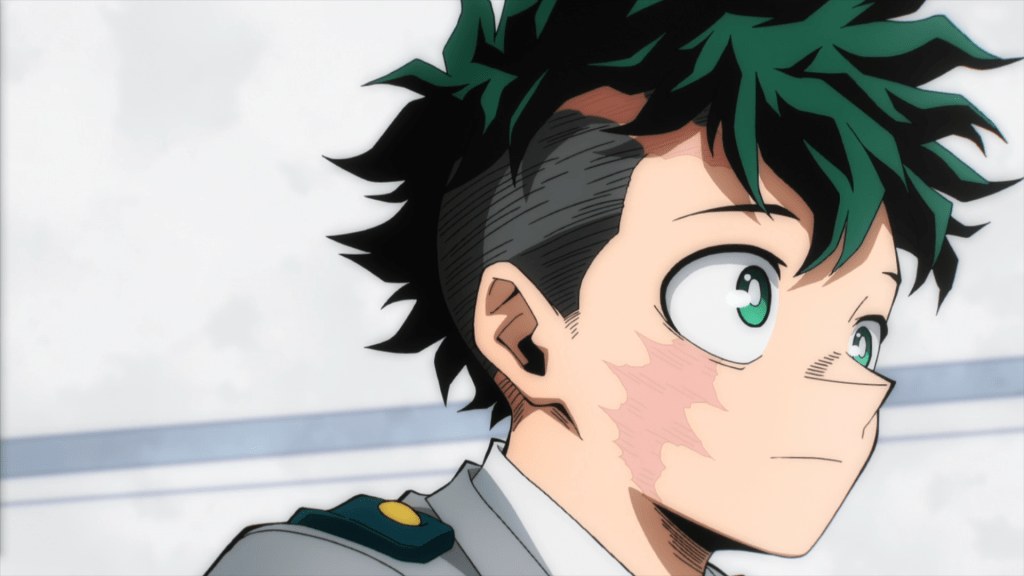
There is very little resistance in my heart to saying that Izuku Midoriya is one of my favorite anime characters, though if you asked me for an explanation on the spot, you might be disappointed. I just kinda like the guy. He’s nice and cute and everything I love about a lot of superheroes. I love how much of myself I see in him – who I was, who I am, and who I’d like to be. The most inspirational qualities I see in him aren’t solely rooted in his strength or agility, either, because those things were never what made him special to begin with. I envy the same quality that caught All Might’s eye: his capacity to leap into action before thinking, to help someone in need.
So yes, the story ends with Deku being quirkless again, a conclusion that – again – I thought might feel bittersweet, yet not a second of it felt out of place. Even if the finale hadn’t given Deku a supersuit to let him continue doing hero work, how on earth could it? Quirks never made Deku special. Deku became powerful because he was worthy of that power. The only sad part was Bakugo’s reaction to the news and the way it perfectly put their relationship into perspective. Bakugo wanted to spend the rest of his life competing with his friend for #1, and the loss of that was so disconcerting that he spent hundreds of thousands of dollars to give Deku the chance to be a hero again… It’s kinda romantic, not gonna lie, and this time I am talking about the pair of them.
Saying Goodbye to My Hero Academia
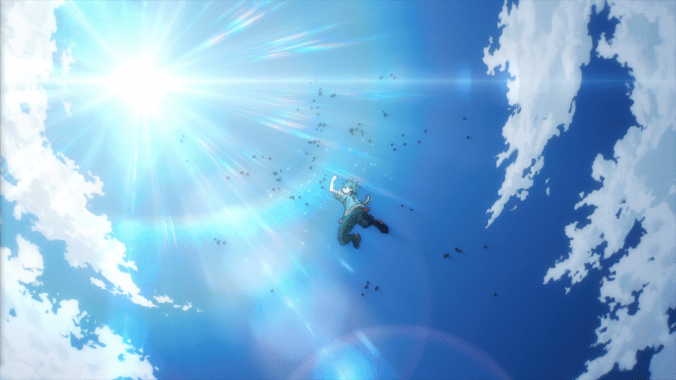
Like I said before, this isn’t a normal review, especially in terms of structure. It’s a lot more personal and “off the cuff,” but to be fair, I jump into most of my reviews with no preparation or notes anyway, so why should this one be any different? If I didn’t at least try to parse my emotional investment through a more critical lens, I wouldn’t feel satisfied enough to hit “publish.” Yet, even after taking a step back, a week after the finale, I can’t help but feel that My Hero Academia‘s ending was kinda perfect.
Nearly every single character in Class 1-A had a moment to shine during the climax, which I always love, albeit with the understanding that it’s kinda the bare minimum in an ensemble like this. But the reason it hits so hard is precisely because of all the little moments and standalone episodes before this. Consistently, across 8 seasons, some of the best episodes were the ones that taught us more about people like Kirishima, Jiro, Shoji, or Aoyama, and that’s just if we’re talking about Class 1-A. Other students like Shinso or upperclassmen like Lemillion and Amajiki were always a joy to see, even after their hypest moments were behind them.
Among the adults, Hawks became an instant fan favorite and just as instantly shipped with Endeavor, which I wholeheartedly support. Eraserhead and Present Mic had a bittersweet arc intersecting with the villain Kurogiri, which lingered until the very end. There are no extras in My Hero Academia, and this is as much the modus operandi of the storytelling style as it is a thematic imperative wielded like a weapon against the main villain. And by main villain, I mean All For One, and I suppose it’s time to pick apart the final, FINAL battle.
How I Learned To Love (To Hate) All For One
When All For One comes back from the dead to take over Shigaraki’s body, I was kinda pissed. It was the first time in the whole season where I thought, “I don’t like where this is going,” which is pretty fucking dire so close to the end. For one thing, it takes an already overpowered villain who was pretty satisfactorily beaten and brings them back in a manner that felt forced. Worse, it felt like it was cheapening Bakugo’s victory over him several episodes prior. That’s a huge accomplishment within this universe, and the fact that he could claim it as opposed to All Might or Deku made it all the more meaningful in his arc.
BUT!… this final battle won me over, for several reasons, the biggest of which has to do with the aforementioned theme: there are no extras. The very contradiction to that thesis was All For One’s raison detre. It was what he espoused last season, at the same time that Jiro was reeling from pain after one of her earphone jacks was torn from her. Your mileage may vary, but I know this was the moment that I wanted All For One to get his shit wrecked more than anything else. Would it have really been as satisfying if he were defeated in a 1v1 as opposed to facing the entire cast? Yes, it would have… Wait, shit, that wasn’t the point I was trying to make.
Okay, sure, Bakugo defeating him definitely would hit just as hard because, power levels be damned, he was still critically injured and seen as unworthy of All For One’s time. So by beating him, Bakugo is winning one for all the underdogs whom the villain underestimated, while also proving himself worthy of attaining #1. But here’s my counterpoint to my own self-confessed gripes with this twist. I think All For One taking over Shigaraki works just a little bit better because it allows the entire cast to play a role in defeating him, and helping elevate Deku in the process.
Paying it Forward / Putting to Rest
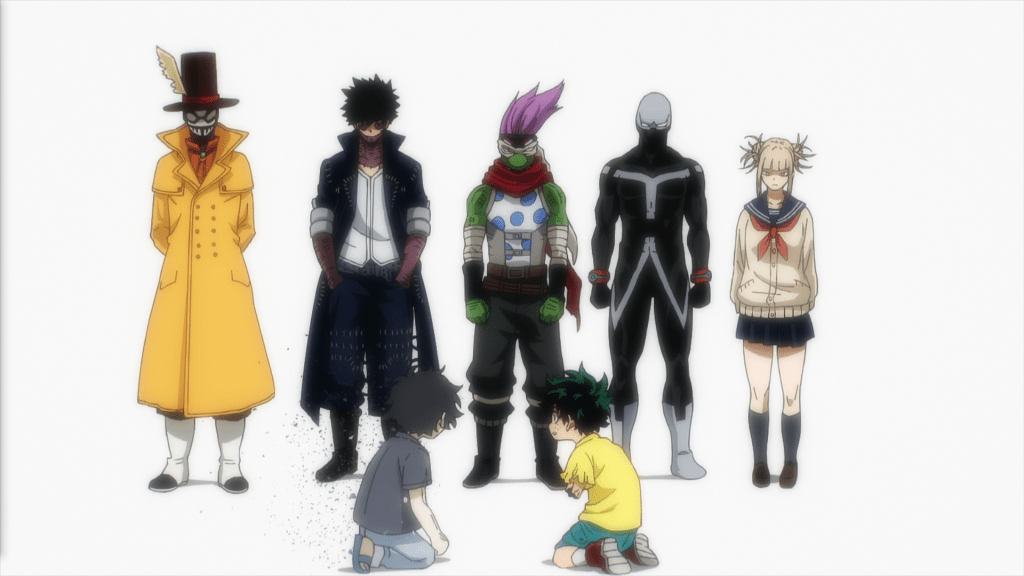

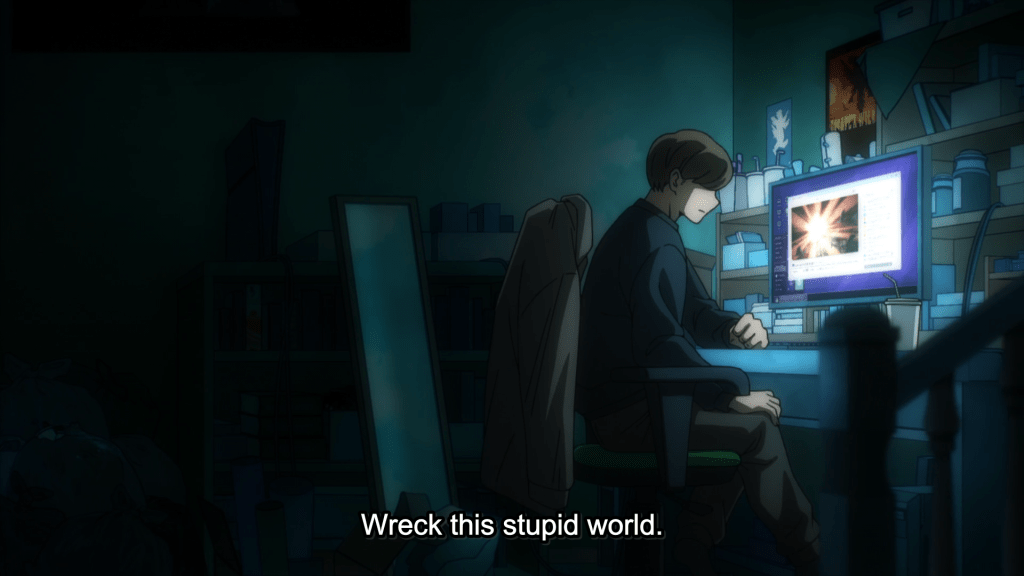
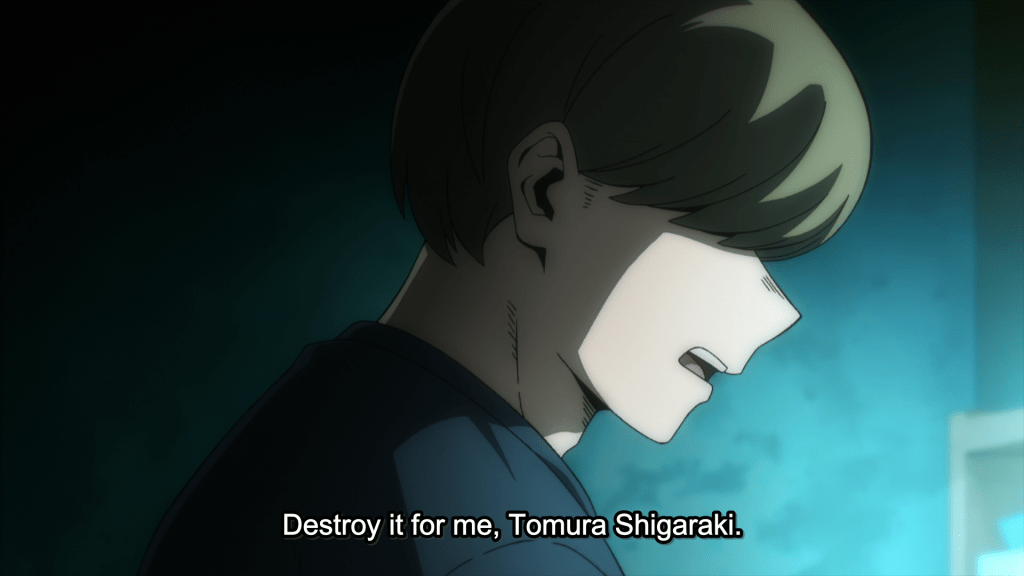
We get to see everyone put in the work, from Yaoyorozu and Kaminari summoning/firing a damn rail gun, to Jiro and Present Mic bombarding All For One with sound waves, and more. Bakugo even launches himself across miles to make sure his boyfriend finishes the asshole for real this time. Furthermore, having All For One take over in this way presents an opportunity for the last traces of Shigaraki’s soul to fight back from within his former body. You get a sense that Shigaraki was saved to some extent in the way that he achieved some inner peace before he passed. I also appreciate the way Shigaraki articulates his motivations, even before All For One slithers back into the story.
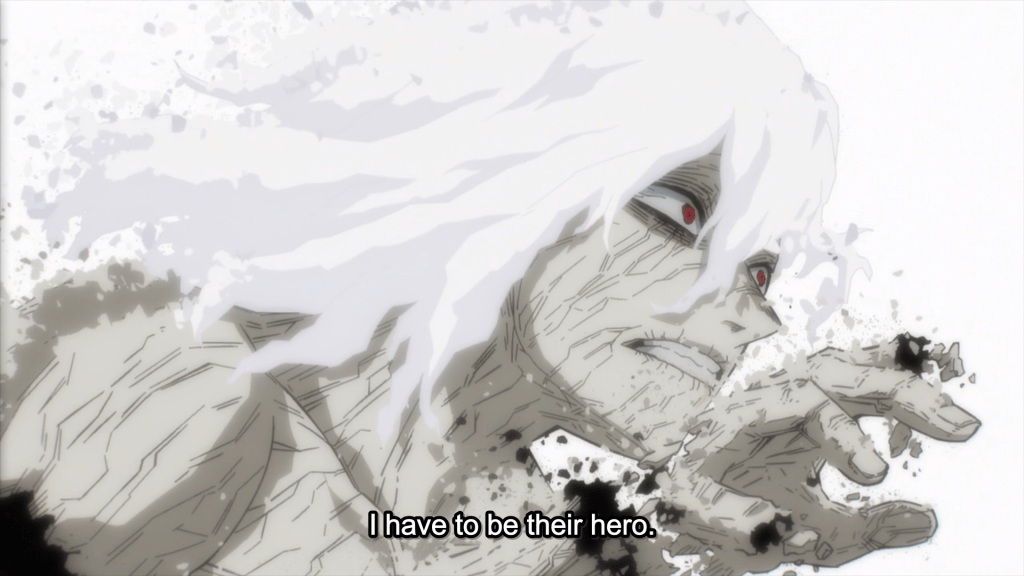
Just as Deku is a hero to people around the globe, we also witness people who pray for Shigaraki’s victory, asking him to destroy this stupid, broken world. For them, Shigaraki tells Deku, “I have to be their hero,” which recontextualizes his hatred as a form of love for all the people who have been left behind by this machine we call society. So maybe an argument could be made that there was no saving Shigaraki, but I think it’s incredibly important that Deku never believed that. If he could have relived the entire events of the series, I’m sure he would have still tried to save him.
The Lingering Weight of Shigaraki’s Hatred
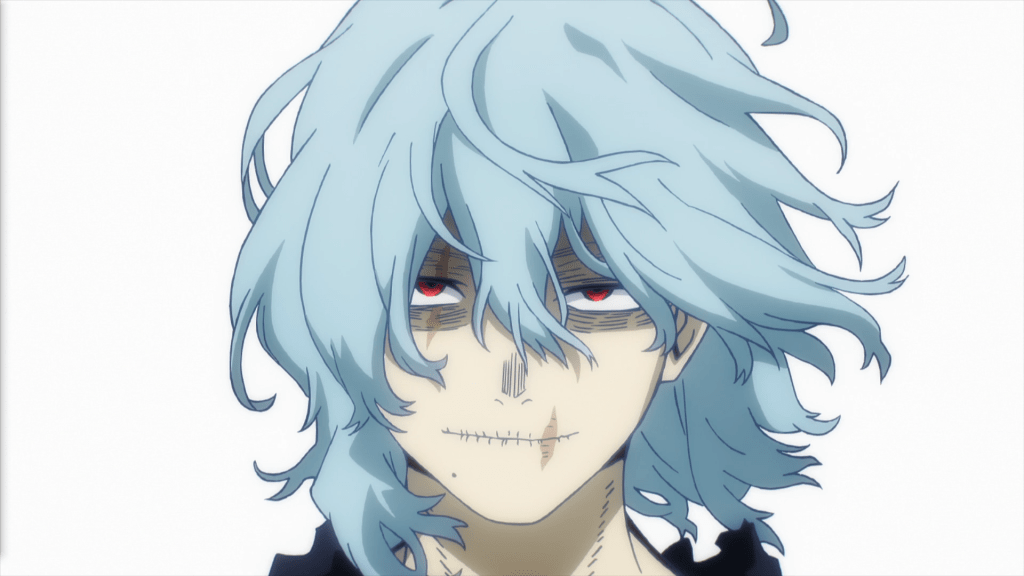
Plus, in working together to defeat All For One, I think Shigaraki and Deku reached an understanding, and the former’s final words are as important as they are succinct: “Best of luck.” Shigaraki wanted to destroy a world that was broken and that created broken people before casting them aside. He didn’t believe in its ability to fix itself, but in the end, maybe a part of him believed that with people like Deku around, perhaps those problems could be fixed. That’s why the spirit of Shigaraki lingers in the finale, a specter watching over the kind of world Deku is fighting to build, and whether that spirit becomes a curse depends on what our heroes do next.
I felt a similar kind of power in Spinner’s despair during his battle with Shoji last season, when the discrimination against heteromorphs took center stage. Sure, this thread should have been expanded on much earlier than Season 7, but it ties back into what I said at the start, about this series growing with me. How relatable this is might vary, but as I’ve grown up with these characters, I’ve entered adulthood only to find a great many things that disturb me about the world, which I’ve been expected to accept as “normal.” Inequality, rising fascism, and censorship – all baked into this blend of nihilism and objectivism, and then peddled as if any alternative is naive and childish because it actually cares about helping people.
A (Brief) Political Reading of My Hero Academia
What does this have to do with My Hero Academia? Well, for people who scoff at the idea that all art is political, much less some, probably not much. Personally, though, I think it has quite a lot to do with the series, especially as it came to a close. In a world full of so many reasons to lose heart, how does one maintain hope? This is a question that superheroes should endeavor to solve by their very existence, and why such stories are more important now than ever, even as a perceived fatigue with these superheroes digs its roots into the public consciousness. Intentional or not – real or not, I think this “fatigue” is a disease hindering one of the most popular sources of hope in fiction.
I don’t think people are tired of superheroes. They’re tired of superhero stories that don’t care enough, that aren’t made with love, that don’t have anything to say or lessons to share, or that can’t at least be cool in a genuine way. Some great stories might slip under the radar while some real stinkers make millions of bucks, but regardless, people still want good superhero stories, and My Hero Academia is more than just good. It is a story not just about saving the world from villains, but putting in the work to actually make the world a better place; a tale of outstretched hands, not just thrown fists. In that, it is everything a superhero story should be, and for that reason, I think it’s fucking incredible.
Glazing Studio Bones Again (Revenge Edition)
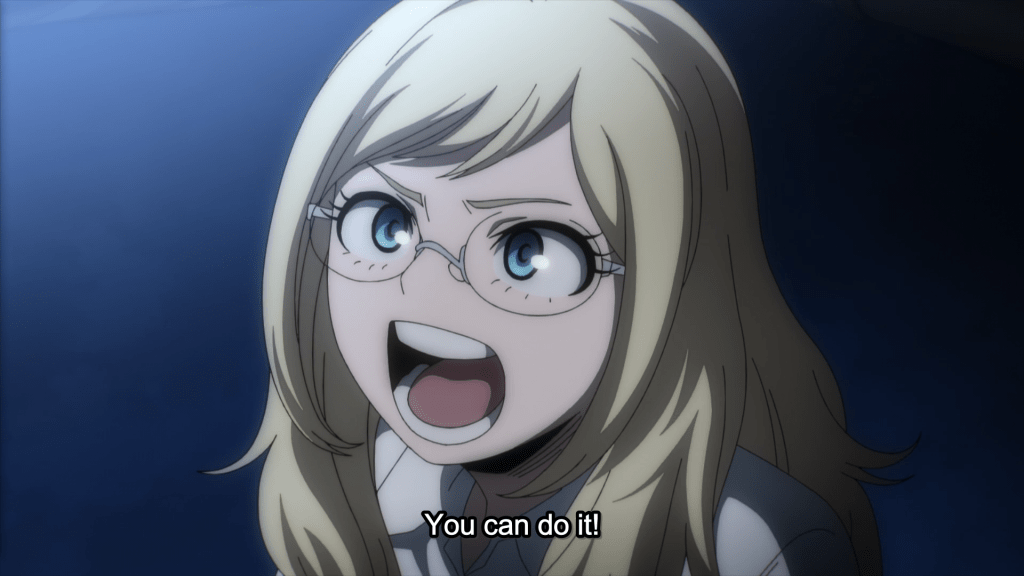
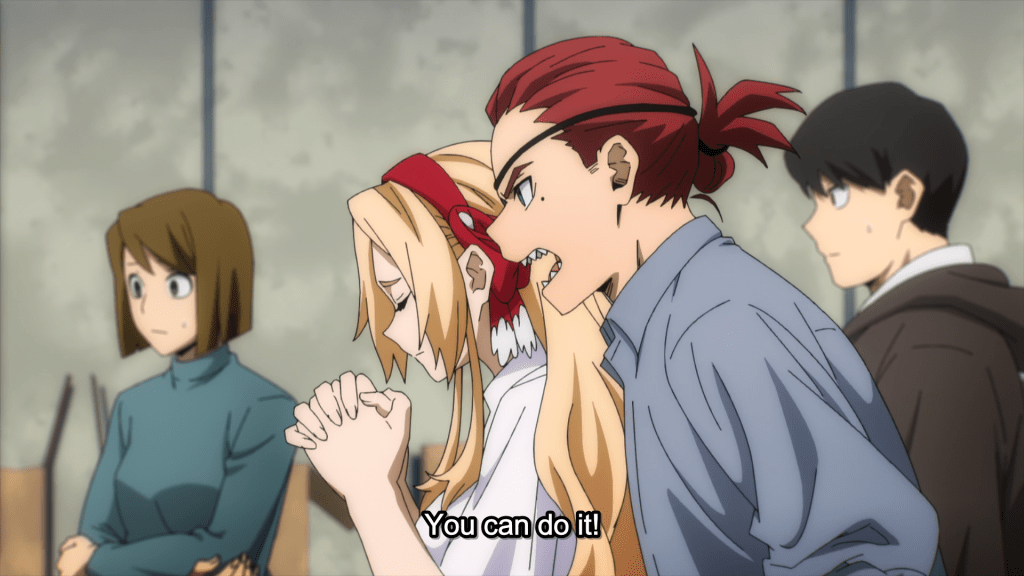
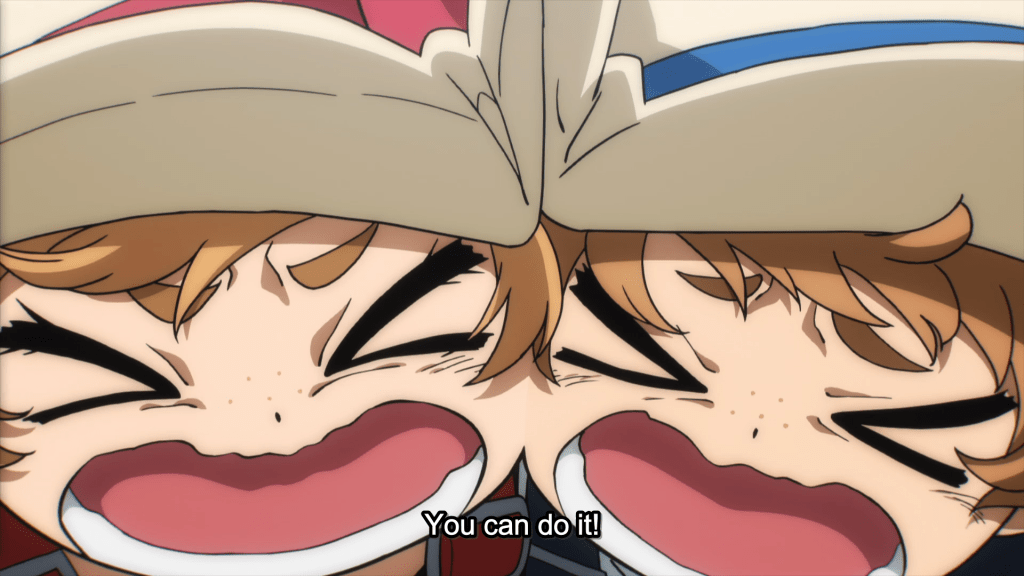


There’s so much more to be said about this season, if not the series at large. I love that the movies are canonized thanks to their respective supporting characters tuning in for the final battle. For one thing, making Melissa the designer of All Might’s power suit and (presumably) Deku’s, rather than an unnamed engineer, was just good storytelling. Plus, as someone who adored Rody in World Heroes’ Mission, seeing him wish Deku good luck during the final battle elicited one of my biggest cheers of the season. They didn’t have to do this, but considering how fun those movies were, I’m unbelievably glad that they did, and Studio Bones deserves to have their original contributions to this franchise be celebrated.
This has been an incredible adaptation from beginning to end, no matter how many haters complained about blue skies or whatever the fuck. Look, did the quality of directing take a hit after Kenji Nagasaki passed the reins to Masahiro Mukai? Yes, and largely because maintaining the standard set by Season 2 would be unfeasible. Were the first three seasons more consistently well-animated? I won’t deny it. But my guy, this series is still far more consistent than a lot of long-running shonen produced before it. Also, Naomi Nakayama, the director of seasons 7 and 8, is probably the best to helm the series since Nagasaki. She does not get enough credit for bringing this series to such a momentous close, nor does Bones get enough credit in general.
Look, forgive my tone, I’ve just heard a few too many trash takes from My Hero Academia haters over the years that reek of ignorance about the studio’s past work and the industry at large. And hey, I’m no expert on the industry either, but show some fucking respect to one of the best animation studios in the world and go back to watching shitty seasonal isekai or whatever.
My Closing Thoughts
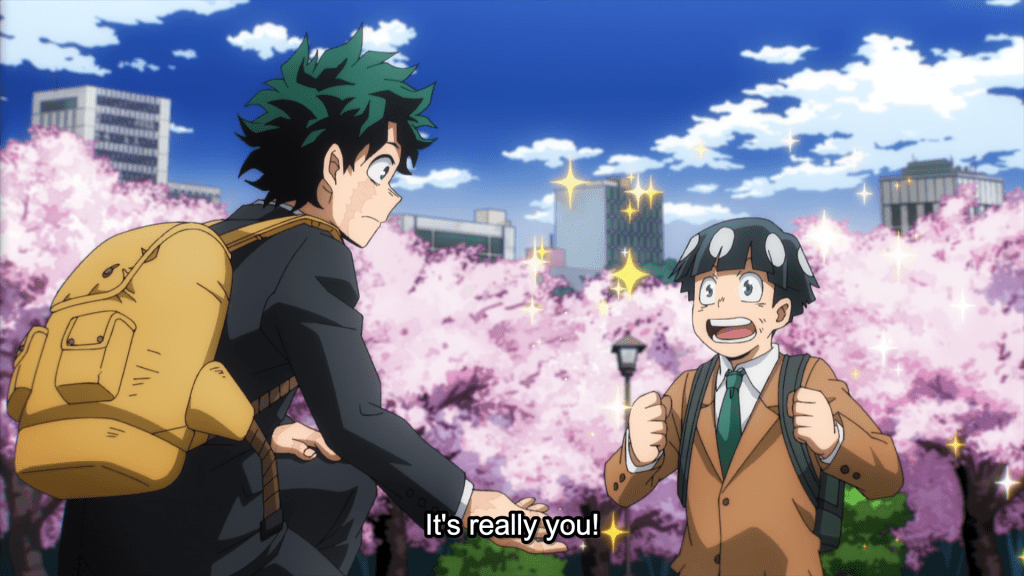

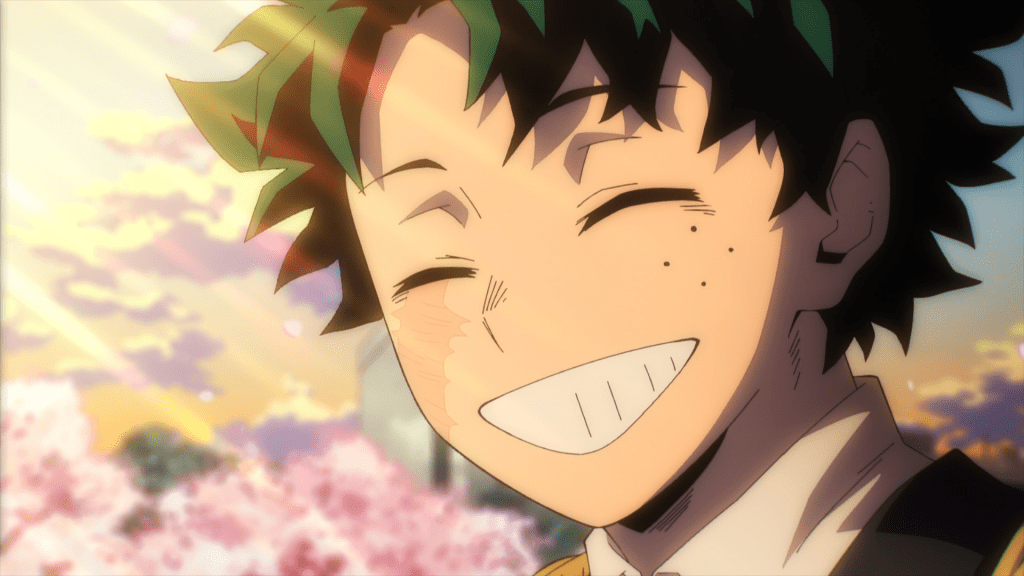
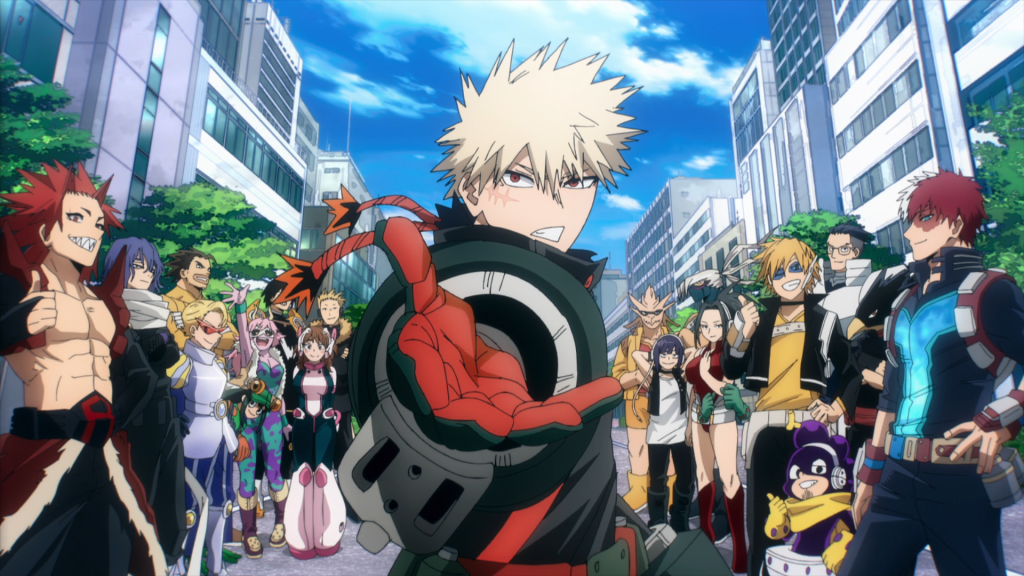

Just today, as I’m writing this section, a full week after the finale aired, they’ve announced an OVA, titled “More”, to be released on my birthday of all days. It will officially celebrate the anime’s 10th anniversary, in addition to (probably) making me cry yet again. Even if there was nothing more to come, though, I can’t imagine being any more satisfied than I am right now, and that is a rare and beautiful thing for a TV series this long. Given the changing landscape of shonen, sometimes I wonder how many more stories like this we’ll get. Short of Bleach‘s final arc or One Piece‘s eventual conclusion, how many shonen will ask us to strap in for the long haul? How many of us will commit to the journey? I can’t say for certain, but I hope there are more than none. In the meantime, I’m glad I was here when My Hero Academia was new, and I will never forget it.
9/10
Fuck, this was a long one. And I swore a lot more than usual. At least, I think. All that time writing at Game Rant gradually changed my instincts when it comes to writing about anime, but with this post, it’s like I was slipping back into the college years. It’s more personal, raw, and (I hope) full of valuable insight.
Leave a comment below telling me what you thought of the finale, and tell me what you loved about this show in general. Favorite characters, favorite seasons, favorite fights – you know the drill.
Above all, thank you for reading. Stay healthy, stay safe, fuck ICE, and I’ll see you in the next one.
 Sakura Sunrise