Kabaneri of the Iron Fortress is Probably Better Than We Give It Credit For

Imagine: It’s 2013. You’re Tetsurou Araki, the famed director behind Death Note and Highschool of the Dead. Now, you and WIT Studio, the offspring of Production I.G., have blown the minds of anime fans new and old with an adaptation of Hajime Isayama’s manga, Attack on Titan.

The problem: You adapted too much of what was already written and there’s not nearly enough content to make a second season immediately. People are frothing at the mouth for more and you want to give it to them. That’s when a script by Ichirou Ookouchi and Hiroshi Seko catches your eye.

It’s similar to Attack on Titan, but only on the most surface level. It’s about humans surviving in walled cities against a horde of monsters with a specific weak spot. However, the setting, technology, aesthetic, and philosophy behind the action are a beast of their own. There’s something here. An opportunity to do what Attack on Titan did, with the same people, unconstrained by the wait for source material.

From director Tetsurou Araki and WIT Studio, with music by Hiroyuki Sawano, this is Kabaneri of the Iron Fortress, the anime that was meant to surpass Attack on Titan.

Continue reading
The ‘Given’ Movie was Just What I Needed

Back in May, I reviewed Given and concluded that it was precisely the kind of fun that I needed in my life. It was also a sign of more normalized, modestly budgeted LGBT anime on the horizon. And if the fancy title card for publishing company Blue Lynx at the beginning of Given‘s movie was any indication, they’re getting bigger and bigger.

I don’t think this will be a very long review primarily because this wasn’t a particularly long movie. I wouldn’t even bother calling it a movie. It was was more of an OVA. The budget didn’t necessarily increase. The CGI during performance scenes wasn’t great but wasn’t terrible either. This was more of what I liked and for a casual viewing on a Saturday night, I wasn’t disappointed.

Continue reading

‘Is It Wrong to Try to Pick Up Girls in a Dungeon?’; The Best Series You Didn’t Give A Chance

How many shows have you passed on because you figured they “weren’t worth your time?” What were the factors that contributed to that impression? Was it a lack of interesting marketing? Was it the style? Or did you buy into the narrative being thrown around that a show was “trashy”?

In 2015, I watched YouTuber Demolition D+’s video on the Spring 2015 anime season and delighted in his humorous appraisal of that quarter’s entertainment. The headliner for the video was Is It Okay to Try to Pick Up Girls in a Dungeon?, or, DanMachi as it would come to be abridged. Demo called it an SAO clone and I didn’t so much as bat an eye because I was laughing so much.

But then the second season aired in 2019 and friends who watched it told me about the show’s world and how it was actually pretty fun and that I should give it a chance. By this point, I’d already accepted that SAO wasn’t as bad as we all thought it was, so who was I to turn down an opportunity to prove my misconceptions wrong.

After watching all three seasons of DanMachi, not only am I shocked as to how anyone could have compared this to SAO beyond the leads sharing the same VA, Yoshitsugu Matsuoka. The art styles aren’t even that similar. More than anything, I’m angry that I didn’t watch this sooner.

This is DanMachi, my new favorite fantasy anime.

Continue reading

[Repost] The Great Pretender Review: Cases 1 through 3

The following is my review of Cases 1 through 3 of The Great Pretender that I wrote for Anime Quarterly back in September. If you like what you read and are interested in reading more by the AQ crew and me, be sure to bookmark AnimeQuarterly.com and make it your next frequent stop for anime news and reviews. Also, help us grow by supporting us on Patreon.

Continue reading

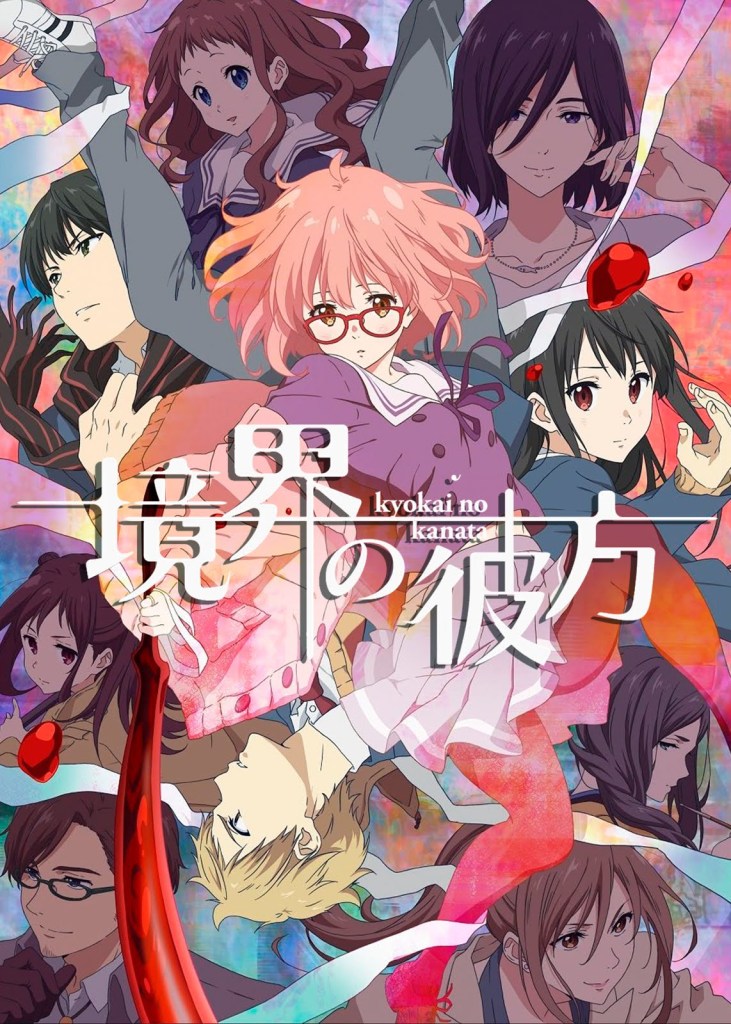
Beyond The Boundary | Kyoto Animation Unleashed

My heart has belonged to Kyoto Animation for a long time. And their shows have always looked good – that’s not even a faintly nuanced observation. The 2010s was the advent of an in-house style that helped forge their identity without ever feeling like a stagnant or limiting trait of the production house. Be it the character work by Miku Kadowaki, Futoshi Nishiya, or others, the character art is something that hasn’t quite been matched by another studio.

Even before their in-house style became synonymous with their identity, their artwork was rarely a sore spot in the final product. However, how well do we regard the actual “animation” of Kyo Ani’s works?

Pretty well as a matter of fact. Consistently. From Liz and the Blue Bird to Silent Voice, I’ve praised the subtle character movements and facial twitches that create the small reveries of human pathos. Occasionally, these dramas or slice-of-life comedies might even present an action scene. Kobayashi’s Dragon Maid had ridiculously bombastic action and even Clannad had a pretty dope fight scene. However, I get the feeling that when people say that Kyoto Animation has great animation, they actually mean “great artwork.” It’s worth distinguishing between the two.

I don’t think any show from the studio has consistently reminded me of how great their animation talent is more than one particular show. If you would permit the generalization, the average viewer may not stray close to offering a critique of actual animation outside of shows or genres that incentivize consistent motion in their presentation. Hence why most people, regardless of their inclination to media criticism, often praise the animation of the hottest shonen/action series.

Following that line of logic, this week’s review is an action show with plenty to gush over. Beyond the Boundary – Taichi Ishidate’s directorial debut – is one of my favorite works by Kyoto Animation, and what I believe to be their best-looking show. Or rather, it is the most consistently upfront with what the studio is capable of, both in TV and film.

Continue reading

A Project Itoh Retrospective, Part III – Genocidal Organ

Part I – The Empire of Corpses

Part II – Harmony

I find it amusing that the Project Itoh films adapted Itoh’s novels in the reverse order of when they were released. While that wasn’t the original intention, as the release schedule was different before The Empire of Corpses‘ announcement, it nevertheless became this way.

Empire was a mere concept of a story never completed by Itoh himself before he lost his battle with cancer. Next, Harmony, the tale of medical dystopia, was written amid Itoh’s cancer treatment. Genocidal Organ might not have a clear parallel to Itoh’s plight, but it was his first and most prominent written work. Through this film project, it’s almost like Itoh was becoming alive again.

That said, the film was hardly as optimistic as such a claim would imply. Genocidal Organ is a militaristic sci-fi drama that dissects the mind of soldiers in a future where they can be made to feel nothing. The influence between Itoh and the works of Hideo Kojima is plain as day and this story arguably goes even harder in portraying the horrors of modern warfare than MGS4 did.

This film was also delayed from late 2015 to late 2017 as Manglobe went bankrupt and production resumed under a new studio. The production problems combined with the long wait meant that the film project lost steam while the expectations grew larger for those still anticipating it. When all was said and done, was Project Itoh a success?

Continue reading

A Project Itoh Retrospective, Part II – A Review of Harmony

Part I – The Empire of Corpses

Rarely in discussions of book-to-film adaptations am I in a position where I’ve read the book. Most times I come at those discussions from a neutral standpoint, weighing the deviations vs the quality of the work. Additionally, the difference between the two mediums has to be accounted for. Some things work better in a book and some things work better in a movie.

The only work by Satoshi Itoh that I’ve read is Genocidal Organ, his first and most famous novel. I read it in anticipation of the delayed animated film. Part of me felt like I should indulge in the original material after the second film in the Project Itoh trilogy left me disappointed. From Studio 4°C, this is Harmony.

Continue reading

A Project Itoh Retrospective, Part I – The Empire of Corpses

I’ve only ever read one of the works by the late Satoshi Itoh. It was his first novel, Gyakusatsu Kikan, or in English, Genocidal Organ. It was a stirring sci-fi novel depicting a future in which first-world countries became surveillance states out of fear of terrorism. Once you’ve read some of his work, it isn’t surprising that he was great friends with Hideo Kojima, the writer/ director behind the Metal Gear Solid series.

Itoh wrote three published novels in his time before losing a battle with cancer in 2009. Genocidal Organ was followed by Harmony in 2008. In the same year, he penned the novelization of Kojima’s grandest work yet, Metal Gear Solid 4: Guns of the Patriots. Before losing a battle with cancer in 2009, Itoh began work on another story, The Empire of Corpses.

That final story would go on to be finished by Itoh’s friend Toh Enjoe and published in 2012. In 2014, a film project was announced, adapting all three of his original stories to animation. Genocidal Organ would be animated by Manglobe (Samurai Champloo, Ergo Proxy). Harmony would be helmed by Studio 4°C (the Berserk: Golden Age Arc movies, Mind Game). Finally, The Empire of Corpses would be helmed by Studio WIT (Attack on Titan, Kabaneri of the Iron Fortress).

This ambitious project would be simply titled: Project Itoh.

Even with no subtitles, this trailer gives me chills

Back in 2017, I wrote briefly about Itoh’s history in anticipation of Genocidal Organ‘s theatrical release in the US. However, I missed an opportunity to truly explore the merits of these films. It’s been three years and I haven’t seen much attention given to these unique science-fiction stories. It’s time to consider whether or not this project truly did justice to the works of a talented author who passed away too soon.

From director Ryoutarou Makihara, this is The Empire of Corpses.

Continue reading

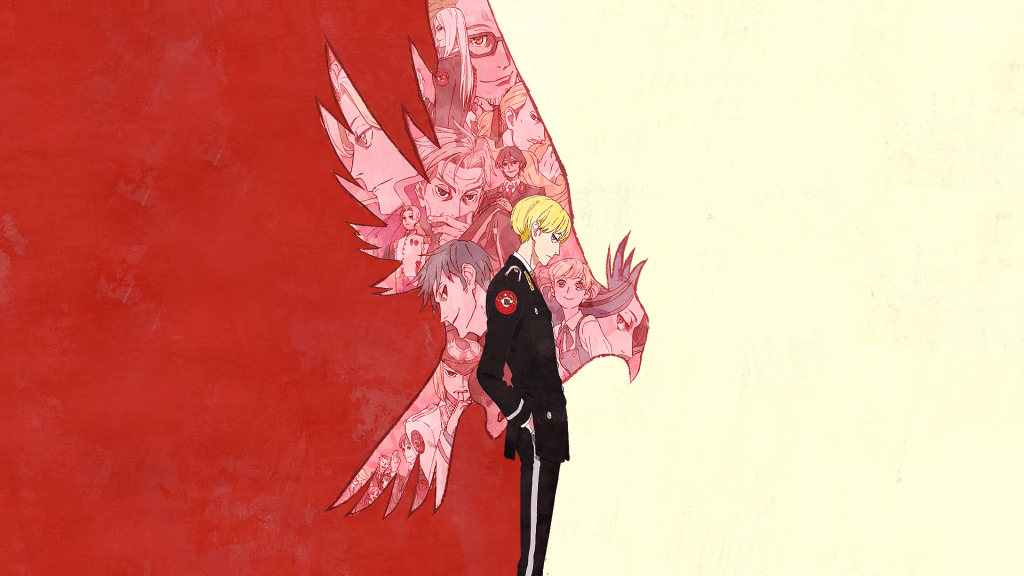
A Review of ACCA: 13 – Territory Inspection Dept.

Rarely does a show come along that makes me rethink what I want from a story. Across any number of genres I’m interested in, there is an expectation of how the story will explore “drama. The numerous action shows I watch explore their drama through physical interchange, be it spectacular or grounded in realism.

Even adult dramas with a sparse number of action scenes will present other, more personal forms of violence as well as confrontation through dialog. Slice of life dramas or comedies may have lighter tones, but they may culminate in some dramatic climax where the tone changes.

This week, I’m exploring a show that approaches its story in a far more relaxed manner. It presents its political theater in a captivating way unlike any other show I’ve watched, and made me reassess how I look at what makes a drama “mature.” From director Shingo Natsume and Studio Madhouse, this is ACCA 13 – Territory Inspection Dept.

Continue reading