A Project Itoh Retrospective, Part I – The Empire of Corpses

I’ve only ever read one of the works by the late Satoshi Itoh. It was his first novel, Gyakusatsu Kikan, or in English, Genocidal Organ. It was a stirring sci-fi novel depicting a future in which first-world countries became surveillance states out of fear of terrorism. Once you’ve read some of his work, it isn’t surprising that he was great friends with Hideo Kojima, the writer/ director behind the Metal Gear Solid series.

Itoh wrote three published novels in his time before losing a battle with cancer in 2009. Genocidal Organ was followed by Harmony in 2008. In the same year, he penned the novelization of Kojima’s grandest work yet, Metal Gear Solid 4: Guns of the Patriots. Before losing a battle with cancer in 2009, Itoh began work on another story, The Empire of Corpses.

That final story would go on to be finished by Itoh’s friend Toh Enjoe and published in 2012. In 2014, a film project was announced, adapting all three of his original stories to animation. Genocidal Organ would be animated by Manglobe (Samurai Champloo, Ergo Proxy). Harmony would be helmed by Studio 4°C (the Berserk: Golden Age Arc movies, Mind Game). Finally, The Empire of Corpses would be helmed by Studio WIT (Attack on Titan, Kabaneri of the Iron Fortress).

This ambitious project would be simply titled: Project Itoh.

Even with no subtitles, this trailer gives me chills

Back in 2017, I wrote briefly about Itoh’s history in anticipation of Genocidal Organ‘s theatrical release in the US. However, I missed an opportunity to truly explore the merits of these films. It’s been three years and I haven’t seen much attention given to these unique science-fiction stories. It’s time to consider whether or not this project truly did justice to the works of a talented author who passed away too soon.

From director Ryoutarou Makihara, this is The Empire of Corpses.

Continue reading
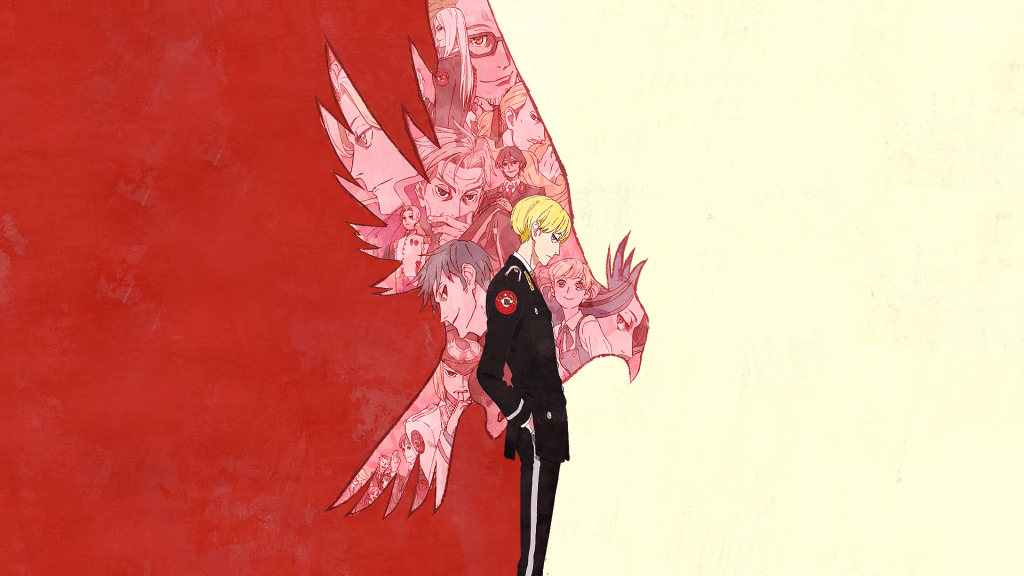
A Review of ACCA: 13 – Territory Inspection Dept.

Rarely does a show come along that makes me rethink what I want from a story. Across any number of genres I’m interested in, there is an expectation of how the story will explore “drama. The numerous action shows I watch explore their drama through physical interchange, be it spectacular or grounded in realism.

Even adult dramas with a sparse number of action scenes will present other, more personal forms of violence as well as confrontation through dialog. Slice of life dramas or comedies may have lighter tones, but they may culminate in some dramatic climax where the tone changes.

This week, I’m exploring a show that approaches its story in a far more relaxed manner. It presents its political theater in a captivating way unlike any other show I’ve watched, and made me reassess how I look at what makes a drama “mature.” From director Shingo Natsume and Studio Madhouse, this is ACCA 13 – Territory Inspection Dept.

Continue reading

A Review of Burn the Witch

Bleach, despite the myriad criticisms I’ve heard leveled at it, has maintained a reputation akin to anime royalty. Even from the outside, it isn’t unfathomable as to why. The art direction and style is striking enough that I can’t say I’ve seen many shows that have mirrored the look of its characters. Additionally, the show’s lifespan on cartoon blocks like Toonami guaranteed it a legacy in the minds of a generation that stayed up way too late on a Saturday night to see the newest episodes.

2020 marks the 20th anniversary of the franchise and in celebration of that, the series seems to be getting a resurgence in more ways than one. Firstly, it was announced that the manga’s final arc would be adapted in a new anime project. Secondly, a new manga spinoff of Bleach would begin in the summer of this year. The spinoff had previously started as a one-shot back in 2018 but would now turn into a full series, with a short film meant to generate hype and interest. The series in question: Burn The Witch.

Continue reading

Mobile Suit Gundam: Unicorn, My First Gundam Series

Mobile Suit Gundam is the pinnacle of the mecha genre and has been astonishing fans for decades with classic after classic. Whether in the “Universal Century” canon or the numerous alt-universe spinoffs, Gundam has explored so many different possibilities and stories, all under the care of one studio: Sunrise.

It is surprising, then, just how long I went without having ever completed a full Gundam series. I remember watching Iron-Blooded Orphans on Toonami when it aired, but I didn’t get too far into it before moving on to other shows. To be honest, I’ve held off for so long because the Gundam series, as important as its reputation has made it out to be, has always appeared rather daunting.

Just as the Fate series can seem overwhelming from the outside, I was never sure where to start with Gundam. Thankfully, at the recommendation of some friends, I found myself falling in love with a comparably short but oh so deep entry to jumpstart what I’m sure will be a longtime fandom. From Kazuhiro Furahashi, the director of Dororo, Hunter x Hunter (1999), and Rurouni Kenshin, this is Mobile Suit Gundam: Unicorn.

Continue reading

[Repost] A First Impressions of The Millionaire Detective: Balance Unlimited

The following are my first impressions of The Millionaire Detective that I wrote for Anime Quarterly back in July. If you like what you read and are interested in reading more by the AQ crew and me, be sure to bookmark AnimeQuarterly.com and make it your next frequent stop for anime news and reviews. Also, help us grow by supporting us on Patreon.

Continue reading

A Review of Boogiepop and Others

Sometimes a show comes on your radar that just seems impossible to fail. There are just the right people attached to get you hyped by their pedigree alone and the prospect of a joining of those parties only makes you more excited. Unfortunately, hype is a gamble. No creator is perfect and no matter how good one work is, it doesn’t guarantee that the writer or director can’t fumble with another project.

Kouhei Kadono’s novel series from the late 90s, Boogiepop, is – according to fans I’ve talked to – one of the most influential light novel series out there. It paved the way for meta works like that of Nisio Isin’s Monogatari Series. It was a psychological, supernatural drama about otherworldly entities preying off of the anguish of humanity and the angel of death that released people from that anguish: Boogiepop.

In the west, the novel series and manga didn’t get official translation until the mid-2000s and even then it became mired by low sales and dropped. It wasn’t until 2019 that the fourth and fifth novels were finally released in English when a renewed interest in the series was stirred. A byproduct of this was last year’s animated adaptation.

Madhouse would be producing the new series. Back in 2000, the same studio made Boogiepop Phantom, an original story not based on a particular novel entry. Directing would be Shingo Natsume, famous for Space Dandy and One Punch Man, among other things. The music would be composed by Kensuke Ushio, whose aesthetic talents have captured hearts with A Silent Voice and Devilman Crybaby. Even Yoshiaki Kawajiri was credited for the storyboarding.

From the staff to the promotional PV (seen above), everything was promising. And then after 18 episodes, almost none of what was in the promo was in the final series. What I got ended up feeling like a fraction of what the universe of Boogiepop had to offer. Was there a silver lining or was Boogiepop and Others another adaptation to be forgotten.

Continue reading

The Anthology From the Man Who Brought You Akira

No convention has been a greater boon to animation as a whole than the anthology. Granted, I love anthologies in most mediums. A collection of short stories from a slew of diverse, creative minds can expose audiences to all kinds of stories and genres they wouldn’t normally see or seek out themselves.

In terms of animated anthologies, works like Batman: Gotham Knight, The Animatrix or recent experiments like Love, Death, & Robots are perfect examples. They expand upon established works and introduce their own lore spanning myriad genres and subject matter, all while experimenting with myriad art styles.

The best part is that you can hook the audience with at least one story and they’ll surely be curious enough to see how the others fare. Maybe they don’t love all of them, but even one or two great stories can make the entire collection worth it, especially if the whole package is an hour and forty-five-minute film with three stories.

In 1995, Madhouse and Studio 4°C collaborated to create Memories, a collection of three short films based on short manga stories written by Katsuhiro Otomo, the man who created Akira. Since Otomo seems to always be involved in the animated adaptations of his work, he was the executive producer for Memories and even directed the third and final short himself.

Together with Darker Than Black director Tensai Okamura, Studio 4°C co-founder Koji Morimoto, and legendary director/writer Satoshi Kon, Memories was an ambitious fusion of three very different kinds of stories. If the objective was to make something that would stick in your mind, then they certainly picked a fitting title.

Continue reading

Masahiro Ando’s Shakespearean Epic; A Review of Blast of Tempest

Here comes Matthew again, leaping to review another anime by Bones. I suppose that’s all I’m good for, isn’t it? And it’s directed by Masahiro Ando, no less…

Is Masahiro Ando my favorite anime director? He’s certainly up there with blokes like Takuya Igarashi. After all, Ando directed Snow White with the Red Hair, a show that I consider to be an empowering masterpiece of feel-good fantasy romance. Be it a drama or an action show, he is a talented director… though not without some missteps.

What I watched of Canaan never gripped me and reeked of a show whose potential was hurt by low-denominator tropes and poor writing. Under the Dog was an average pilot to a series that will never come out. And Sirius the Jaeger? More like Serious Disappointment (don’t hit me).

I would call Masahiro Ando the Brad Bird of anime. He makes some legendary stuff that will stick with you for ages, but he also tends to bat 50/50. It’s hard to tell why. Maybe it’s the source material on certain shows, maybe it’s other staff members, or maybe Ando is just inconsistent depending on the project.

I’ll cut through some of the snark and assure you of one thing, though. Blast of Tempest (or, Zetsuen no Tempest: The Civilization Blaster) is certainly on the good side of Ando’s batting average.

Continue reading

My Review of BNA is Somewhere Else (Also, The Future of This Blog)

I’ve been blogging here since freshman year of college and in the time since, I’ve thought a lot about what comes after graduating. For a while there, I was so excited about how well this blog has done that I shelved that question when it was most important. Given current events, however, I had to kick it into high gear and think about my future.

So I’m sad to say that my review of Trigger’s new show, BNA, isn’t here…

Instead, it’s on another site that I am now a writer for

That’s right bitches, your boy is a staff writer.

Continue reading