Rarely in discussions of book-to-film adaptations am I in a position where I’ve read the book. Most times I come at those discussions from a neutral standpoint, weighing the deviations vs the quality of the work. Additionally, the difference between the two mediums has to be accounted for. Some things work better in a book and some things work better in a movie.
The only work by Satoshi Itoh that I’ve read is Genocidal Organ, his first and most famous novel. I read it in anticipation of the delayed animated film. Part of me felt like I should indulge in the original material after the second film in the Project Itoh trilogy left me disappointed. From Studio 4°C, this is Harmony.
I know last week I said “come back next week for the next Project Itoh review,” but this week got off to a bumpy start.
As of writing, I’ve come down with a cold. Yes, I’m sure it’s just a cold, I don’t think I have COVID. Normally I’d fight through a cold like it’s nothing but something about getting sick at all after six months of quarantining made me a lot more suspicious about what this was as soon as I got symptoms.
So I was spending the last two days – which are typically my biggest writing days – sleeping. If it were just that, I probably would have been a bit more indecisive on whether to make this post. However, there is something very important going on today, the day this is posted…
My good friend, “Sad Scientist,” is an awesome writer and two years ago he wrote a short story called Scorpion Grass. It was a supernatural mystery set in Japan following two high-schoolers trapped in their school during the holiday break of Oban.
For two years the work went unfinished. Sci had made some changes on a whim and ended up erasing the original ending (happens to the best of us). Thankfully, I still had a saved copy of the original story, so he got to work editing it and perfected it. And now he’s created his own WordPress to publish it.
We all have our inspirations and Sci’s are works of modern fantasy such as Monogatari and the works of Kinoko Nasu (Tsukihime, Garden of Sinners). My love for modern fantasy is well-documented so I was all on-board. I encourage anyone looking for a good read to check out his work. Fans of Monogatari will surely get a kick out of it, and it has enough of an identity on its own that you’ll be itching for more when you’re finished.
I’ve only ever read one of the works by the late Satoshi Itoh. It was his first novel, Gyakusatsu Kikan, or in English, Genocidal Organ. It was a stirring sci-fi novel depicting a future in which first-world countries became surveillance states out of fear of terrorism. Once you’ve read some of his work, it isn’t surprising that he was great friends with Hideo Kojima, the writer/ director behind the Metal Gear Solid series.
Itoh wrote three published novels in his time before losing a battle with cancer in 2009. Genocidal Organ was followed by Harmony in 2008. In the same year, he penned the novelization of Kojima’s grandest work yet, Metal Gear Solid 4: Guns of the Patriots. Before losing a battle with cancer in 2009, Itoh began work on another story, The Empire of Corpses.
That final story would go on to be finished by Itoh’s friend Toh Enjoe and published in 2012. In 2014, a film project was announced, adapting all three of his original stories to animation. Genocidal Organ would be animated by Manglobe (Samurai Champloo, Ergo Proxy). Harmony would be helmed by Studio 4°C (the Berserk: Golden Age Arc movies, Mind Game). Finally, The Empire of Corpses would be helmed by Studio WIT (Attack on Titan, Kabaneri of the Iron Fortress).
This ambitious project would be simply titled: Project Itoh.
Even with no subtitles, this trailer gives me chills
Back in 2017, I wrote briefly about Itoh’s history in anticipation of Genocidal Organ‘s theatrical release in the US. However, I missed an opportunity to truly explore the merits of these films. It’s been three years and I haven’t seen much attention given to these unique science-fiction stories. It’s time to consider whether or not this project truly did justice to the works of a talented author who passed away too soon.
From director Ryoutarou Makihara, this is The Empire of Corpses.
Rarely does a show come along that makes me rethink what I want from a story. Across any number of genres I’m interested in, there is an expectation of how the story will explore “drama. The numerous action shows I watch explore their drama through physical interchange, be it spectacular or grounded in realism.
Even adult dramas with a sparse number of action scenes will present other, more personal forms of violence as well as confrontation through dialog. Slice of life dramas or comedies may have lighter tones, but they may culminate in some dramatic climax where the tone changes.
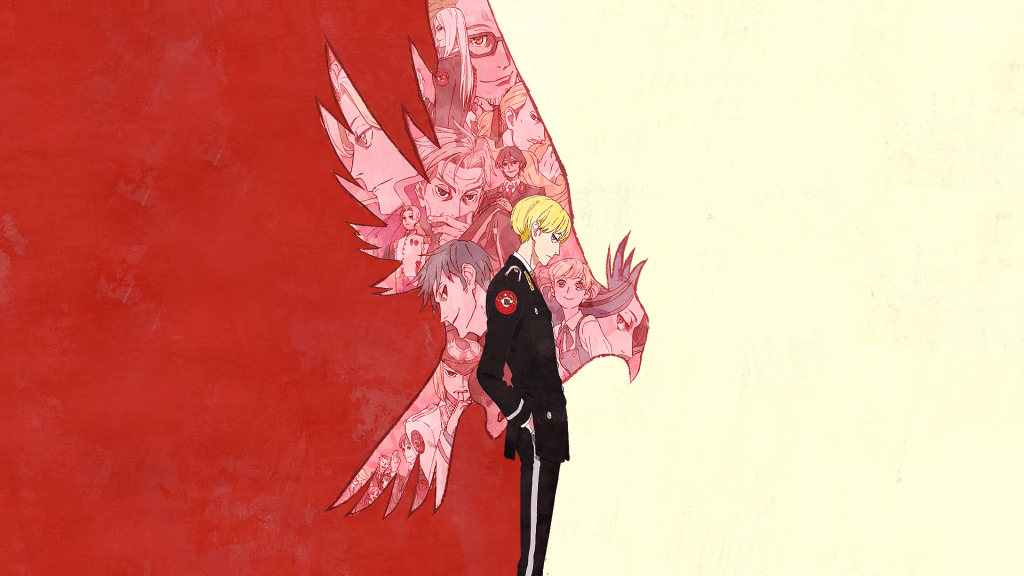
This week, I’m exploring a show that approaches its story in a far more relaxed manner. It presents its political theater in a captivating way unlike any other show I’ve watched, and made me reassess how I look at what makes a drama “mature.” From director Shingo Natsume and Studio Madhouse, this is ACCA 13 – Territory Inspection Dept.
Bleach, despite the myriad criticisms I’ve heard leveled at it, has maintained a reputation akin to anime royalty. Even from the outside, it isn’t unfathomable as to why. The art direction and style is striking enough that I can’t say I’ve seen many shows that have mirrored the look of its characters. Additionally, the show’s lifespan on cartoon blocks like Toonami guaranteed it a legacy in the minds of a generation that stayed up way too late on a Saturday night to see the newest episodes.
2020 marks the 20th anniversary of the franchise and in celebration of that, the series seems to be getting a resurgence in more ways than one. Firstly, it was announced that the manga’s final arc would be adapted in a new anime project. Secondly, a new manga spinoff of Bleach would begin in the summer of this year. The spinoff had previously started as a one-shot back in 2018 but would now turn into a full series, with a short film meant to generate hype and interest. The series in question: Burn The Witch.
Mobile Suit Gundam is the pinnacle of the mecha genre and has been astonishing fans for decades with classic after classic. Whether in the “Universal Century” canon or the numerous alt-universe spinoffs, Gundam has explored so many different possibilities and stories, all under the care of one studio: Sunrise.
It is surprising, then, just how long I went without having ever completed a full Gundam series. I remember watching Iron-Blooded Orphans on Toonami when it aired, but I didn’t get too far into it before moving on to other shows. To be honest, I’ve held off for so long because the Gundam series, as important as its reputation has made it out to be, has always appeared rather daunting.
Just as the Fate series can seem overwhelming from the outside, I was never sure where to start with Gundam. Thankfully, at the recommendation of some friends, I found myself falling in love with a comparably short but oh so deep entry to jumpstart what I’m sure will be a longtime fandom. From Kazuhiro Furahashi, the director of Dororo, Hunter x Hunter (1999), and Rurouni Kenshin, this is Mobile Suit Gundam: Unicorn.
The following are my first impressions of The Millionaire Detective that I wrote for Anime Quarterly back in July. If you like what you read and are interested in reading more by the AQ crew and me, be sure to bookmark AnimeQuarterly.com and make it your next frequent stop for anime news and reviews. Also, help us grow by supporting us on Patreon.
If you like the review and are interested in reading more by me and the rest of the AQ crew, be sure to bookmark AnimeQuarterly.com and make it your next frequent stop for anime news and reviews. Also, help us grow by supporting us on Patreon. Without further ado, here is my review of BNA.
 Sakura Sunrise